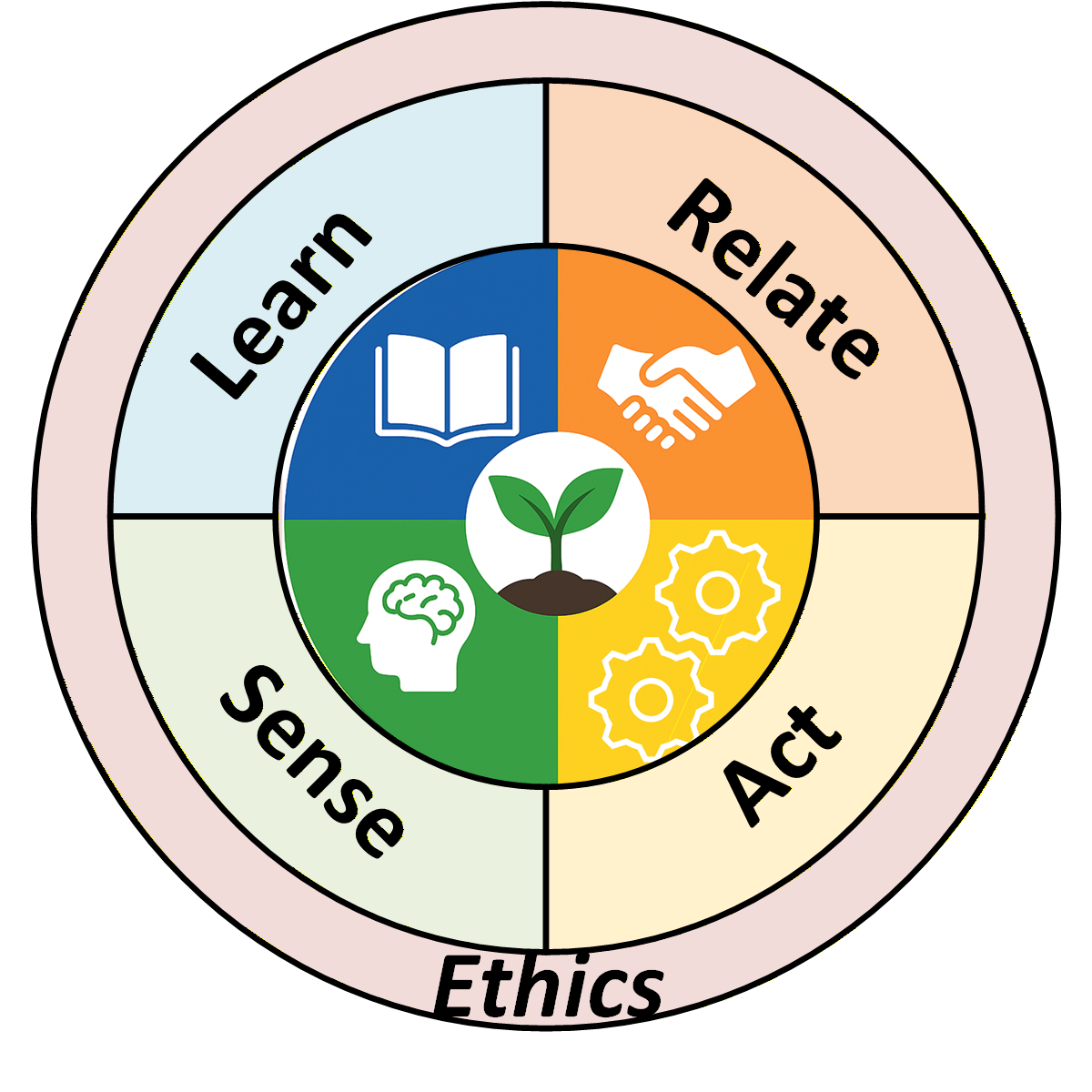
Part of the Adaptive Capacity model → View full model
Relational Domain
- Organisations do not learn — people in relationships do.
- Trust determines whether tacit knowledge is shared or withheld.
- Relationships are the medium through which learning, adaptation, and ethics operate.
- Under pressure, relationships degrade before systems fail.
- If relationships collapse, adaptive capacity collapses.
Relationships are not a soft issue — they are the structural condition for learning.
🚩 High-Level Red Flags
- People speak carefully rather than honestly
- Participation is performative rather than voluntary
- Alignment is enforced rather than emergent
- Difficult conversations are avoided or redirected
- “Consensus” exists without challenge
👉 These indicate: coherence has been replaced by compliance
Framing the Domain: Structure vs Activation
Most organisations don’t fail to manage knowledge — they fail to activate it.
Knowledge captured in systems (transactional) does not become capability unless it is lived, shared, and re-internalised through relationships.
→ Explore: Relational vs Transactional Knowledge Management
🧩 Core Patterns
🧠 Voluntary Contribution Is the Signal
- Trust → contribution
- Control → silence
Voluntary contribution is the clearest indicator of a functioning learning system.
Tacit knowledge — experience, judgement, intuition — cannot be demanded, it is offered only when individuals judge it to be safe and worthwhile.
When contribution is voluntary:
- people share insight without being asked
- dissent is expressed early
- judgement is applied in real decisions
- learning becomes visible in practice
When contribution is constrained:
- participation becomes performative
- silence replaces challenge
- artefacts increase while understanding declines
- learning continues in form, but not in substance
Learning is visible when people contribute without being asked.
Why this matters
Voluntary contribution is not a cultural preference.
It is a structural condition for learning.
When individuals choose not to contribute:
• assumptions remain unchallenged
• risks are not surfaced
• learning loops break before internalisation
The system continues to function.
But it gradually reverts to familiar patterns.
Source Note — Converting Compliance into Contribution
😢 Defensive Routines Block Learning
- People protect identity over truth
- Difficult issues are avoided
- Language replaces honesty
👉 Result: Organisations become skilled at avoiding learning (Argyris)
Source Note — Ecocentric vs Egocentric Thinking
Chris Argyris Perspective: Defensive Routines & Double-Loop Learning
🤔 Dehumanisation Erodes Trust and Meaning
👉 🧩 Additional Patterns
🤿 Subject Areas
Subject Areas provide deeper and more structured exploration of specific disciplines, practices, and modelling approaches referenced throughout the pathways and Source Notes
Subject Area: Transformation Debt and Survivor Syndrome
Subject Area — Mindsets for Adaptive Capacity
Subject Area – Stakeholder Engagement
Subject Area: Guided Human–AI Collaboration
Subject Area: Trust — The Key to Cohesion, Learning and Contribution
Subject Area: Building Resilience through Social Ecology