Keeping organisational knowledge alive, usable and connected to reality
Twenty-first-century organisations do not suffer from a shortage of information.
They are surrounded by:
- data,
- documents,
- dashboards,
- messages,
- reports,
- models,
- systems,
- research,
- artificial intelligence,
- and an almost continuous stream of opinion and interpretation.
Yet more information does not necessarily create greater knowledge.
An organisation may be information-rich while remaining unable to:
- agree on what important terms mean,
- recognise which information can be trusted,
- connect local experience to wider organisational patterns,
- preserve critical knowledge when experienced people leave,
- discover when assumptions no longer fit reality,
- transfer learning across teams, capabilities and organisational boundaries,
- or turn knowledge into coordinated judgement and action.
The central challenge is no longer simply collecting, storing or retrieving information.
It is maintaining a living organisational capacity through which knowledge can be:
- created,
- shared,
- interpreted,
- challenged,
- stabilised,
- applied,
- tested,
- governed,
- renewed,
- and carried forward over time.
This is the role of the Knowledge Operating System.
Working definition
The Knowledge Operating System is a dynamic socio-technical system that facilitates the creation, sharing, stabilisation, application, testing, governance, and renewal of organisational knowledge.
It brings together:
- people and their craft knowledge,
- relationships, trust and social capital,
- communities and Islands of Coherence,
- shared mental models and common language,
- organisational attention and awareness,
- structured and unstructured information,
- Enterprise Architecture and the Knowledge Base,
- Design Thinking, Strategic Thinking and adaptive inquiry,
- the Operating Model through which knowledge informs action,
- Gemba, feedback, consequence and Hansei,
- technology and artificial intelligence,
- governance, ownership and stewardship.
The Knowledge Operating System isn’t a single platform or repository. Instead, it is the organisational ecology that keeps knowledge meaningful and enables it to guide actions.
Why a Knowledge Operating System is needed
Traditional knowledge management was developed when the main challenge was capturing and sharing limited information. In the twenty-first century, the challenge has changed. Information is now plentiful, but attention is limited. AI can rapidly produce models, plans, summaries, options, and explanations. However, speed does not ensure:
- information integrity (accuracy, completeness, and provenance),
- correct context,
- shared understanding among knowledge users,
- legitimacy,
- competence,
- or responsible decision-making.
At the same time, organisations operate across increasingly diverse stakeholder groups and complex networks of:
- employees,
- customers,
- suppliers,
- regulators,
- communities,
- technologies,
- ecosystems,
- professions,
- partners,
- contractors,
- and artificial agents.
No individual, profession, function, dataset, or model can grasp the entire system. In complex settings, cause-and-effect relationships may be ambiguous, interpretations might conflict, and outcomes can manifest only after an intervention changes the system. Therefore, organisations cannot depend solely on analysis, prediction, and control. Instead, they must stay capable of re-sensing, reinterpreting, and adapting as events happen.
In terms of complexity, understanding and learning should come before certainty.
The Knowledge Operating System provides the conditions and mechanisms through which that learning can occur.
The Knowledge Base is not the Knowledge Operating System
The Knowledge Base is the relatively stable structural core within the wider Knowledge Operating System.
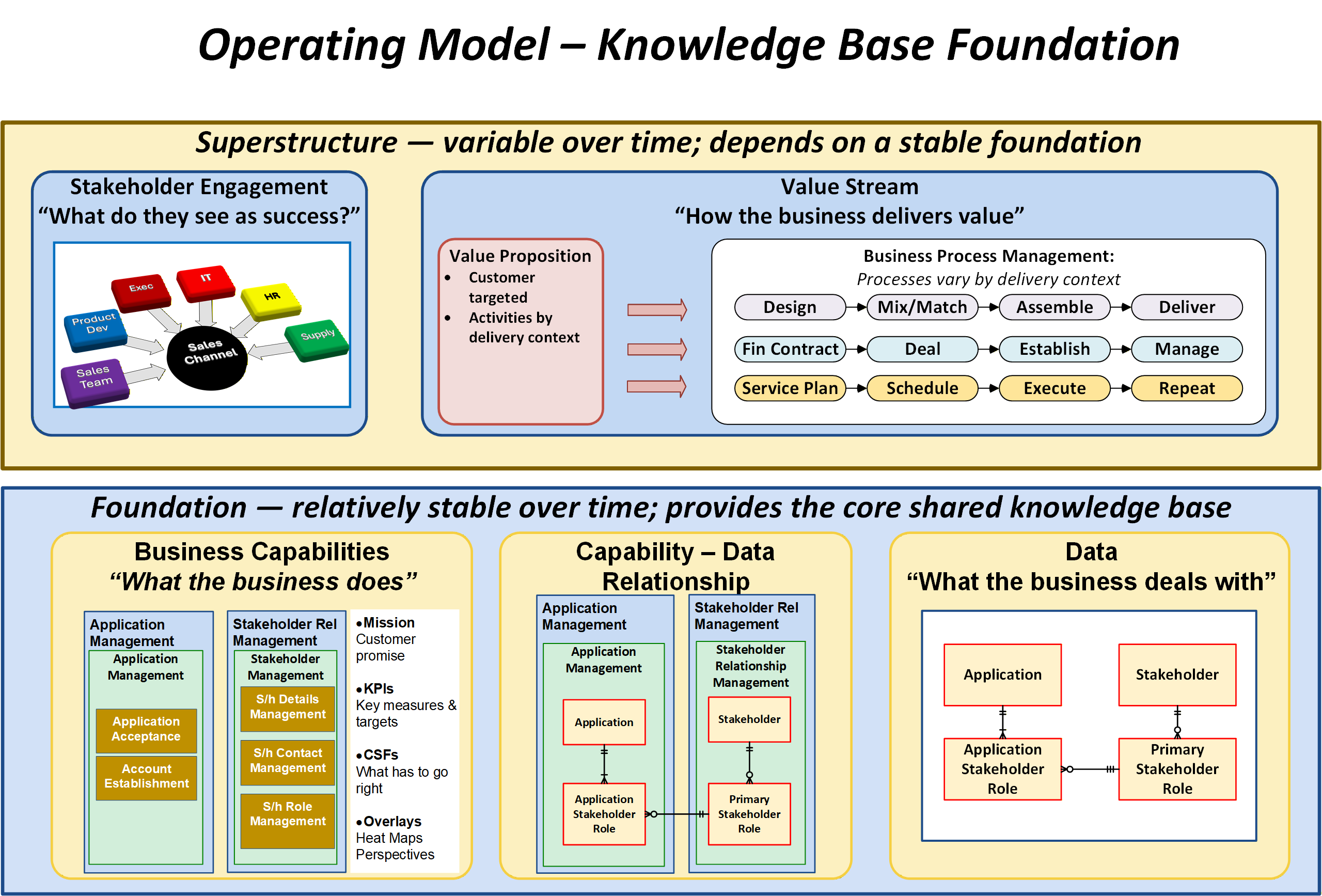
Figure 1: The Knowledge Base of the Operating Model
The diagram distinguishes between two layers that change at very different rates.
The stable foundation
At the foundation are:
- the Business Capability Model,
- the Common Data Model,
- and, critically, the relationship between them.
The Business Capability Model describes what the organisation does.
The Common Data Model describes what the organisation deals with.
The relationship between them connects organisational action with organisational meaning. It establishes:
- which capabilities create, use and depend upon particular information,
- where ownership sits at the level 1 capability, and stewardship sits at the subordinate level 3 capabilities,
- how information must move across capability boundaries, and therefore where system integration is required,
- coherence of definitions and business rules across the organisation.
This relationship is crucial. A capability model lacking its information relationships is structurally incomplete, as it misses operational context, ownership, and accountability.
The BCM and CDM also cross-validate one another. Developing the data model can reveal gaps, overlaps and unclear ownership within the capability model. Conversely, examining the capabilities can reveal missing information, definitions and relationships within the data model. As a result, they evolve together rather than as separate or sequential artifacts.
Processes, systems, organisational structures and delivery arrangements may change frequently. However, the capabilities the organisation requires and the core business concepts it deals with—such as customers, products, suppliers, employees and transactions—change much more slowly.
This relative stability is why the BCM and CDM form the foundation of the shared organisational Knowledge Base.
The variable superstructure
Above the stable foundation sits a more variable superstructure shaped by the organisation’s current context.
It includes:
- stakeholder perspectives and definitions of success,
- value propositions,
- value streams,
- business processes,
- delivery arrangements,
- systems,
- and other features of the Current Operating Model.
The superstructure is the primary means by which the organisation adapts. As customer expectations, technology, operating conditions and stakeholder needs change, the organisation adjusts how value is delivered, how work is performed and how capabilities and information are deployed.
Most adaptations modify the superstructure without altering the underlying BCM or CDM. This stable foundation allows alternative arrangements to be understood, compared and redesigned without losing organisational meaning or coherence.
The BCM and CDM change when adaptation or learning alters:
- what the organisation must be capable of doing,
- what it fundamentally deals with,
- or the ownership, meaning and relationships connecting capability and information.
The foundation provides continuity. The superstructure is how the organisation adapts. Learning determines when the foundation itself must evolve.
The Knowledge Operating System
The Knowledge Base provides a relatively stable shared structure.
The Knowledge Operating System is the wider living system through which that structure is:
- developed,
- interpreted,
- socialised,
- used,
- tested,
- challenged,
- governed,
- and renewed.
The Knowledge Base comprises both a stable foundation and a variable superstructure. Its stable foundation helps the organisation retain coherence as the superstructure adapts.
The Knowledge Operating System keeps the whole Knowledge Base connected to people, practice and reality, enabling both layers to be tested, maintained and renewed.
The Knowledge Operating System comprises the Knowledge Base, Human Capital and Social Capital, through which organisational knowledge is created, interpreted, shared, applied, tested and renewed.
Human Capital includes:
- skills, experience, judgement and practical wisdom;
- craft and tacit knowledge held by individuals;
- methods and tools people can use;
- and the capacity to understand and apply explicit organisational knowledge.
Social Capital includes:
- shared understanding of purpose and vision;
- mindsets, values and behavioural norms;
- trust, relationships and informal networks;
- communities and Islands of Coherence;
- dialogue through which assumptions and meanings are challenged;
- and the relationships through which tacit knowledge can travel.
The Knowledge Base contains the organisation’s explicit, structured knowledge: its models, definitions, principles, processes, rules, records, and other shared artefacts. It must be used in practice and tested in reality to remain relevant.
Without this connection:
- A model can stay stored even if its underlying meaning is lost.
- A procedure can stay approved even when its assumptions no longer hold.
- A glossary can remain accessible as different groups silently use its terms differently.
The Knowledge Base preserves explicit organisational memory. Human Capital gives people the capacity to understand and use it. Social Capital enables knowledge to flow, meaning to be negotiated, and learning to emerge through shared experience.
The Knowledge Operating System keeps the Knowledge Base, Human Capital and Social Capital connected to purpose, practice and reality.
📖 This leads directly to the central thesis of Adapt, Survive and Flourish:
Adaptive Capacity = Human Capital + Social Capital.
A living system, not a linear pipeline
The Knowledge Operating System does not move knowledge through a fixed sequence. Its functions operate simultaneously, recursively and at different scales across the organisation.
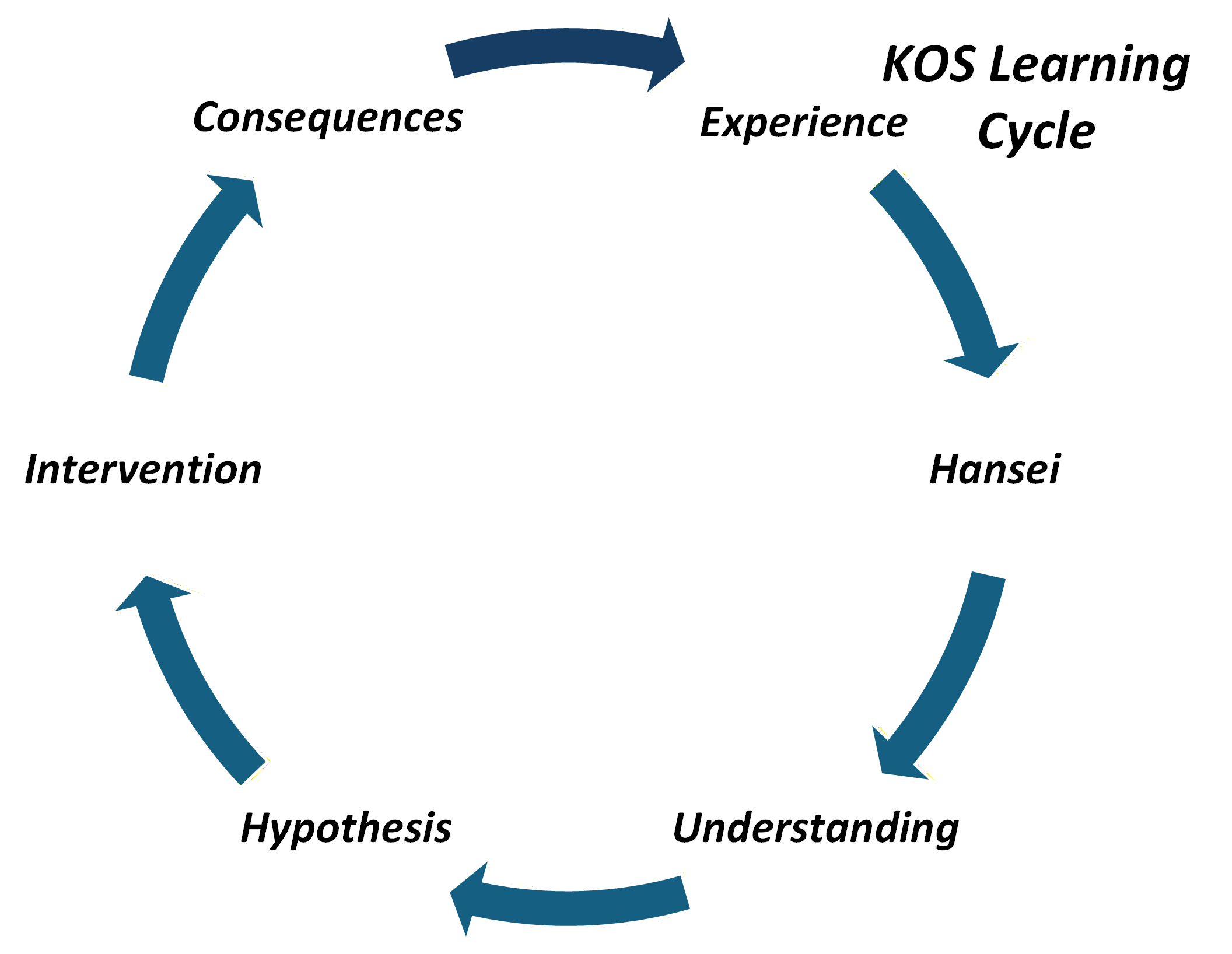
Figure 2: KOS Learning Cycle
At its centre is an adaptive learning cycle. Experience is examined through Hansei, yielding deeper understanding and hypotheses for intervention. The consequences of intervention generate new experience, beginning another cycle of reflection, learning and adaptation.
The cycle is supported by the wider KOS: the Knowledge Base preserves explicit organisational memory, Human Capital provides judgement and capability, and Social Capital enables knowledge, meaning and experience to flow through the organisation.
The enabling environment: purpose, ethics, governance and Ba
Knowledge is never entirely neutral.
Organisations make choices about:
- what receives attention,
- which questions are considered legitimate,
- whose knowledge is respected,
- which data is collected,
- what is measured,
- which consequences count,
- and what may be ignored.
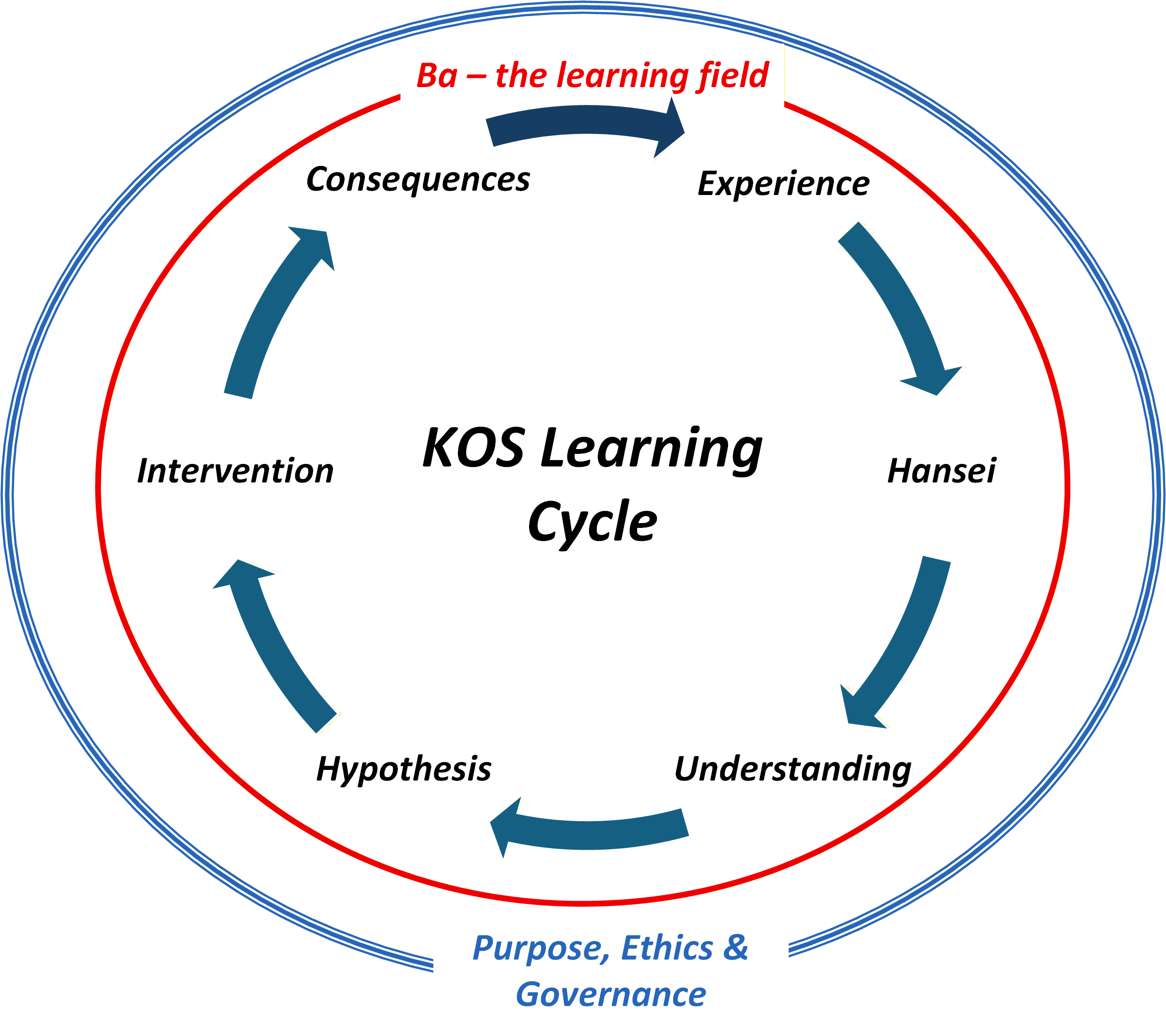
Figure 3: The boundaries of the KOS cycle
Purpose, Ethics, and Governance
- Purpose gives the Knowledge Operating System direction.
- Ethics establishes boundaries.
- Governance makes the use of knowledge answerable to purpose, principles and consequences.
Without this orientation, a highly capable knowledge system may help the organisation:
- optimise extraction,
- defend a preferred narrative,
- improve surveillance,
- manipulate stakeholders,
- conceal harm more effectively,
- or become more confidently wrong.
The overriding mindset is the Scout Mindset:
Seek the best available understanding of reality rather than defend a preferred position. Stay curious, humble, and ready to shift focus or change direction when evidence, changing circumstances, or consequences require it.
Governance must therefore protect:
- truth-telling,
- diversity of perspective,
- informed judgement,
- responsible use of information,
- data integrity,
- accountability for decisions,
- and the ability to question established knowledge.
The KOS does not determine organisational purpose or ethics.
It makes them capable of influencing everyday understanding and action.
Ba — the learning field
Ba is the shared space where relationships, knowledge, learning, and meaning develop through interactions. The social ecology serves as the dynamic foundation.
Ba isn’t isolated; it is supported and maintained by the organisation’s broader social ecology.
Knowledge isn’t confined to documents, systems, or individual minds; it also evolves and endures through relationships and communities.
People learn through:
- shared work,
- observation,
- conversation,
- stories,
- mentoring,
- disagreement,
- experimentation,
- reflection,
- and repeated experience of consequences.
So, Ba is the shared field through which people interact and knowledge develops.
Within that field, learning often concentrates in communities with sufficient:
- shared purpose,
- trust,
- mutual respect,
- common language,
- shared experience,
- and willingness to challenge one another constructively.
These could be Communities of Practice, professional groups, operational teams, or Islands of Coherence. Islands of Coherence indicate where a significant portion of organisational knowledge is stored.
They retain:
- tacit practices,
- stories,
- contextual judgement,
- professional identity,
- rules of thumb,
- shared mental models,
- and practical knowledge of how work fits together.
Their boundaries need not correspond with the organisation chart.
They may span:
- functions,
- professions,
- business capabilities,
- suppliers,
- customers,
- regulators,
- communities,
- and partner organisations.
The objective is not to merge every community into a single uniform culture.
The objective is compatibility, not uniformity.
Different communities may retain distinct expertise and perspectives while developing a common language and shared understanding to cooperate.
Boundary-spanning people — our Nigels — create the social corridors through which knowledge, relationships, practices and stories flow between otherwise separate communities.
A healthy KOS therefore protects:
- local communities of expertise,
- cross-boundary relationships,
- informal knowledge networks,
- mentoring and succession,
- opportunities for shared experience,
- and people trusted by more than one community.
It does not assume that installing an enterprise platform will integrate the organisation socially.
Shared mental models make coordinated action possible
Information isn’t considered shared just because it’s sent, presented, or stored. People might attend the same meeting, read the same report, view the same dashboard, use the same system, yet still develop significantly different interpretations.
A Shared Mental Model refers to a sufficiently aligned understanding of a situation, task, system, relationship, or outcome that helps people coordinate their actions. These mental models don’t require perfect agreement; they are flexible frameworks that can be revised as needed.
They emerge through:
- Construction — individuals articulate their understanding of the situation.
- Co-construction — others build upon, clarify, or merge these explanations.
- Constructive conflict — gaps and contradictions are uncovered and examined.
- Shared representation — models, stories, definitions, and diagrams visualise understanding.
- Practical use — the shared understanding is validated through action and results.
The Knowledge Base offers cognitive anchors to support this process. It includes Business Capability Models, Common Data Models, diagrams, stories, and definitions that enable individuals to explore:
- boundaries,
- assumptions,
- ownership,
- dependencies,
- relationships,
- differing perspectives,
- and consequences.
The artefact is important, but the discussion required to create it is often even more crucial. A technically sophisticated model made in isolation might stay the architect’s, consultant’s, or vendor’s perspective.
Nevertheless, a model developed, challenged, and refined through collaboration with those who understand and perform the work can genuinely become the organisation’s own model.
SECI provides knowledge-creation dynamics
SECI describes the continuing movement of knowledge through four interconnected processes:
- Socialisation — tacit knowledge develops and moves through shared experience and interaction.
- Externalisation — experience, reasoning and assumptions are articulated so they can be explored.
- Combination — explicit knowledge is organised, connected, compared and integrated.
- Internalisation — explicit knowledge is applied and embodied through practice.
These are not isolated stages or specialist layers.
Nor does the Knowledge Operating System depend on a single bridge between a “knowledge cycle” and a “learning cycle.”
SECI operates recursively throughout the system.
People may socialise experience while simultaneously surfacing and sharing emerging insights, relating them to codified knowledge, and reflecting on the outcomes and consequences of practice. Through this process, they test and revise their shared understanding.
Knowledge creation and organisational learning remain coupled through continuing interaction between:
- experience,
- dialogue,
- representation,
- action,
- feedback,
- consequence,
- and reflection.
SECI also produces two related forms of knowledge.
Craft knowledge
Craft knowledge is embodied in:
- skill,
- judgement,
- timing,
- sensory awareness,
- intuition,
- situational recognition,
- and an understanding of what matters in context.
It is developed through experience and cannot be fully transferred through documentation or instruction.
Codified knowledge
Codified knowledge is expressed through:
- models,
- procedures,
- definitions,
- data structures,
- principles,
- policies,
- reports,
- systems,
- and other explicit artefacts.
Codification simplifies communication, coordination, reuse, governance, and preservation of knowledge over time.
However, codified knowledge isn’t inherently valid. It stays useful only if people internalise, apply, challenge, and continuously test it in practice. Otherwise, it risks becoming disconnected from reality.
Enterprise Architecture stabilises shared organisational knowledge.
Enterprise Architecture occupies a critical structural role within the Knowledge Operating System.
Figure 4: The core Knowledge Base that supports the Operating Model
The earlier section established the Knowledge Base as comprising a relatively stable foundation and a more variable operating superstructure. Enterprise Architecture is the discipline that connects, maintains and uses those elements as a coherent body of organisational knowledge.
It provides shared representations that help people understand:
- how purpose and strategy relate to organisational capability;
- how capabilities depend on information, processes, systems and relationships;
- how value is created and delivered;
- where ownership, stewardship and accountability sit;
- how changes in one part of the organisation affect others;
- and whether proposed changes strengthen or fragment the Operating Model.
Enterprise Architecture also makes gaps, contradictions and competing interpretations visible. It enables capabilities, data, value streams, processes, systems and stakeholder perspectives to be examined together rather than designed in isolation.
Its models serve as cognitive anchors and boundary objects. They provide a common reference through which different communities can compare perspectives, challenge assumptions and develop a sufficiently aligned understanding for coordinated action.
Enterprise Architecture does not, by itself, create shared understanding. A technically elegant model developed in isolation may remain the architect’s, consultant’s or vendor’s model.
The models must be:
- developed with and owned by the business—the people who understand and perform the work. The consultant’s role therefore shifts from modeller and model owner to teacher, mentor and facilitator;
- used and tested at Gemba and against operational consequences;
- governed and stewarded over time;
- challenged when they no longer fit reality;
- and updated by the business as organisational learning changes the Knowledge Base.
The artefacts matter, but the dialogue through which they are created, interpreted and tested is far more important.
Within a healthy Knowledge Operating System, Enterprise Architecture becomes workwear rather than shelfware: shared organisational knowledge used to understand the present, explore alternatives, coordinate change and preserve coherence as the Operating Model adapts.
Organisational Awareness is the sensing system.
The Knowledge Operating System cannot remain alive if it only organises what the organisation already believes it knows.
It must also help the organisation discover:
- What is changing?
- What is missing?
- What no longer fits?
- Which assumptions are failing?
- What may be emerging beyond the current field of view?
This is the role of Organisational Awareness.
Organisational Awareness enables the organisation to continuously sense and stay attuned to reality through distributed sensing and attentive management.
Signals arise from:
- people at Gemba,
- customers,
- suppliers,
- communities,
- regulators,
- operational systems,
- internal and external data,
- complaints and compliments,
- weak-signal observations,
- environmental scanning,
- transformation activity,
- unintended consequences,
- and AI-supported research and pattern detection.
No single observer sees the whole field.
Organisational Awareness connects partial perspectives without stripping them of their context.
The Organisational Awareness Hub is not another information repository or central command centre. It helps the organisation:
- select consequential signals,
- preserve their context,
- connect apparently unrelated observations,
- expose contradictory interpretations,
- identify missing perspectives,
- challenge assumptions,
- and redirect attention when reality requires it.
Integration carries learning back into the wider organisation by updating:
- shared mental models,
- the Knowledge Base,
- the Operating Model,
- governance,
- capabilities,
- processes,
- data,
- systems,
- measures,
- and working practices.
Organisational Awareness is therefore the KOS’s sensory system.
The Knowledge Base provides the maps through which signals can be interpreted.
Organisational Awareness shows where the maps may be wrong.
Attention is a governed and finite resource.
A twenty-first-century Knowledge Operating System must recognise that attention is limited.
Meetings, messages, alerts, dashboards, crises, targets, digital systems and reporting requirements continually compete for the same finite human capacity.
Receiving more information does not necessarily lead to greater awareness.
It may produce:
- cognitive overload,
- distraction and shallow interpretation,
- rapid context switching,
- anxiety, chronic stress and burnout,
- fixation on what is immediately visible or measurable,
- disconnection from colleagues, purpose and operational reality,
- and loss of the capacity for sustained attention and reflection.
A healthy KOS, therefore, practises attention stewardship.
It helps the organisation:
- make its current focus visible,
- reduce unnecessary informational noise,
- keep important weak signals from being buried by urgency,
- preserve diverse interpretations long enough for examination,
- sustain inquiry until meaning becomes clearer,
- and redirect attention when stronger evidence or changing circumstances demand it.
The danger is attention capture.
A failing Current Operating Model may consume almost all available attention through:
- urgent work,
- repeated reporting,
- crisis response,
- compliance activity,
- project overload,
- meeting proliferation,
- rework,
- and constant remediation.
The organisation becomes so busy maintaining the present model that it loses the capacity to notice that the model itself is failing.
The KOS must therefore support both:
- focused attention for analysis and action,
- and broad contextual attention for relationships, novelty and consequence.
Adaptive thinking explores what is not yet known.
A Knowledge Operating System cannot be limited to preserving past learning.
It must also support inquiry into:
- uncertainty,
- alternative explanations,
- possible futures,
- weak signals,
- emerging risks,
- and opportunities not visible within the current frame.
Design Thinking and Strategic Thinking operate within the KOS as forms of adaptive inquiry.
They help people:
- portray current reality,
- explore alternative interpretations and possibilities,
- make assumptions visible,
- design interventions,
- test hypotheses against reality through action,
- interpret and respond to consequences,
- and recursively update understanding.
They are not rigid sequences. Feedback is present throughout.
New information may:
- reframe the situation,
- reopen exploration,
- alter an intervention,
- challenge strategic intent,
- or cause the organisation to reconsider the problem itself.
Strategic Thinking operates across organisational and ecosystem boundaries.
Design Thinking often works more closely with human experience, services, products, and local innovation.
Both depend upon:
- curiosity,
- social capital,
- psychological safety,
- multiple perspectives,
- reflection,
- experimentation,
- consequence awareness,
- and willingness to revise assumptions.
Within the KOS, they connect purpose, awareness, knowledge, capability and action.
The KOS must respond appropriately to complexity
Not every situation requires the same form of knowledge, inquiry or learning. The appropriate response depends upon the nature and level of complexity being encountered.
The following discussion draws on Snowden’s Cynefin framework, which distinguishes between clear, complicated, complex and chaotic contexts. (Snowden & Boone, 2007). Each context calls for a different dominant form of sensemaking, decision-making and action. These distinctions should not be treated as rigid classifications. An organisation’s initial interpretation may be incomplete, conditions may shift, and different aspects of the same situation may fall under different contexts.
Clear conditions
In conditions that appear familiar, stable and well understood, the organisation may rely primarily upon:
- standards,
- training,
- procedures,
- compliance,
- and established practice.
However, apparent clarity should not be mistaken for complete understanding. Familiarity, narrow framing, superficial enquiry or pressure for rapid action may obscure uncertainty, changing conditions and emerging consequences. Established practices must therefore remain open to challenge when reality no longer aligns with them.
Complicated conditions
In complicated conditions, the organisation will require:
- expertise,
- diagnosis,
- modelling,
- analysis,
- and the integration of specialist knowledge.
Expert analysis is essential, but no single specialist perspective should automatically be treated as complete. Different interpretations may need to be compared and integrated, and the assumptions underlying them should remain open to challenge.
Complex conditions
In complex conditions, knowledge cannot be fully established in advance. Understanding develops through interaction with the situation itself.
The organisation therefore requires:
- participation,
- dialogue,
- experimentation,
- safe-to-learn interventions,
- shared inquiry,
- rapid feedback,
- reflection on consequence,
- and continuing adaptation.
Chaotic conditions
In chaotic conditions, immediate action may be necessary to reduce harm and create sufficient stability for deeper inquiry and learning to begin.
A mature KOS helps the organisation form a provisional judgement about the conditions it faces while remaining alert to the possibility that its initial framing may be incomplete or wrong.
It prevents the automatic application of:
- standardisation to novelty,
- expertise to emergence,
- dashboards to relational problems,
- control of uncertainty,
- or large solutions to situations that first require inquiry.
The most dangerous failure is premature certainty.
When uncertainty becomes psychologically uncomfortable, the organisation may rush to:
- classify the problem,
- force agreement,
- produce a model,
- announce a solution,
- establish milestones,
- and create a dashboard,
not because the situation has been adequately understood, but because action creates the reassuring appearance of clarity and control.
The Knowledge Operating System must therefore help the organisation act on the best available understanding while continuing to sense, question, reflect and learn as reality unfolds.
The Operating Model turns knowledge into organisational action
The Knowledge Operating System does not sit outside everyday work.
It informs and is shaped by the Operating Model.
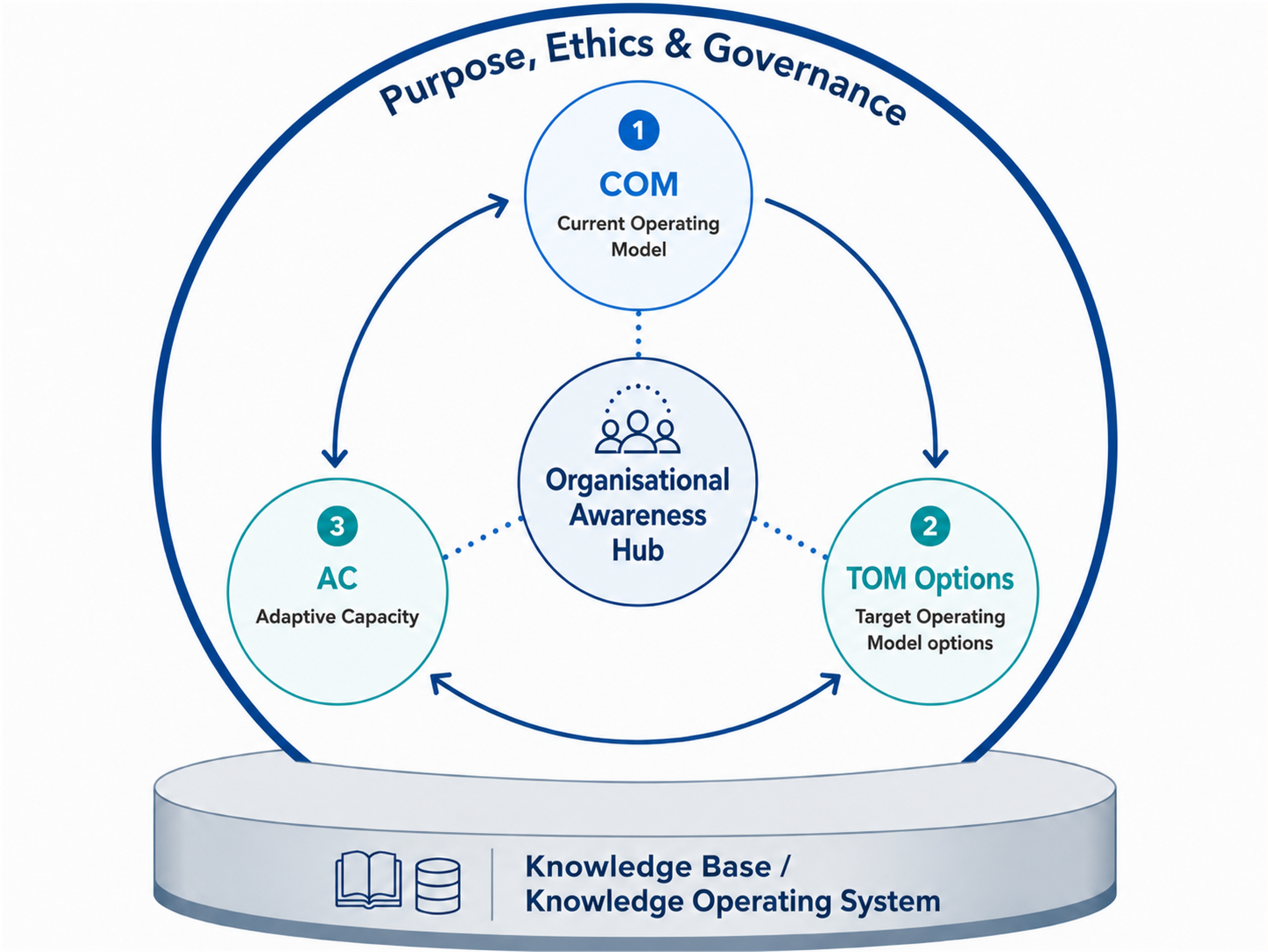
Figure 5: Organisation Model and the KOS
The Operating Model is the practical configuration through which the organisation connects:
- purpose,
- capabilities,
- processes,
- roles,
- decision rights,
- information,
- systems,
- measures,
- incentives,
- relationships,
- governance,
- and accountability.
It is where organisational knowledge becomes operational reality.
Current Operating Model
The Current Operating Model includes both formal design and lived reality:
- actual work practices,
- workarounds,
- unofficial spreadsheets,
- informal coordination,
- local interpretations,
- tacit knowledge,
- unclear responsibilities,
- duplicated data,
- and the brilliant people who continually compensate for weak design.
Much of an organisation’s most consequential knowledge may be hidden within these informal arrangements.
Target Operating Model options
A Target Operating Model is not a destination or a polished future-state diagram. It is a hypothesis.
Each TOM option contains assumptions about:
- people,
- knowledge,
- trust,
- systems,
- capability,
- data,
- decision-making,
- stakeholder behaviour,
- and environmental conditions.
Those assumptions must be visible and monitored.
- Organisational Awareness watches them.
- Adaptive Thinking explores alternatives.
- The Knowledge Base provides the shared map.
- Gemba tests whether the model works.
- Hansei helps the organisation learn from the result.
The Knowledge Operating System therefore underpins the organisation’s capacity to understand its present model, explore alternatives and adapt without losing coherence.
Gemba tests organisational knowledge
Gemba — The place where reality teaches and learning becomes unavoidable:
- ideas meet actual conditions,
- plans create consequences,
- models encounter exceptions,
- customer and stakeholder experience becomes visible,
- assumptions are challenged,
- and reality pushes back.
Learning does not become real because:
- a workshop concluded,
- a model was approved,
- a policy was published,
- a system went live,
- or people completed training.
Learning becomes real when knowledge survives contact with reality.
Gemba provides the Knowledge Operating System’s reality-testing function.
At Gemba:
- codified knowledge is applied,
- craft knowledge is drawn upon, tested and further developed,
- contradictions are exposed,
- schema failure becomes visible,
- new tacit understanding emerges,
- and feedback returns to the wider system as new knowledge.
Hansei provides the reflective discipline through which experience becomes learning:
- What actually happened?
- What did we misunderstand?
- Which assumptions failed?
- What consequences did we overlook?
- What must now change?
Without Gemba, the KOS can become increasingly internally coherent while progressively drifting from reality.
Human–AI collaboration in the Knowledge Operating System
Artificial intelligence changes the economics of organisational knowledge.
AI can assist with:
- environmental scanning,
- research and synthesis,
- weak-signal detection,
- classification and retrieval,
- candidate Business Capability Models,
- Common Data Models,
- definitions and glossaries,
- scenario exploration,
- identification of relationships and contradictions,
- red teaming — deliberately challenging assumptions, models and proposed actions to expose weaknesses, blind spots and unintended consequences,
- Socratic questioning,
- and translation of governed knowledge into forms useful at Gemba.
This creates the possibility of Kanban Architecture:
People pull the architectural and organisational knowledge they need, in the form they need, when they need it.
AI can act as:
- apprentice modeller,
- research assistant,
- critical questioner,
- pattern detector,
- translator,
- and a conversational interface to the governed Knowledge Base through controlled technical connections.
But AI does not:
- experience organisational consequences,
- possess accountability,
- own business data,
- understand every political and relational context,
- preserve psychological safety,
- or determine what the organisation ought to do.
AI may also:
- create plausible but false coherence,
- amplify stale or biased knowledge,
- overwhelm attention with generated material,
- conceal uncertainty beneath fluent language,
- centralise meaning within technical systems,
- encourage surveillance,
- and replace human dialogue with convenient transactions.
The test is not whether AI can produce an answer.
The test is whether Human–AI collaboration improves the organisation’s capacity to:
- understand reality,
- challenge assumptions,
- exercise judgement,
- make responsible decisions,
- and learn from consequences.
AI can accelerate the Knowledge Operating System. It cannot become its sovereign.
Governance, ownership and stewardship
Knowledge does not remain trusted and useful without stewardship.
A healthy KOS requires clear responsibility for:
- capabilities,
- data,
- definitions,
- principles,
- models,
- interfaces,
- communities,
- attention,
- and learning from consequences.
Capability Owners
Capability Owners are accountable for the coherence and fitness of their capabilities, including the knowledge, data, processes, systems and relationships upon which those capabilities depend.
Data Owners and Data Stewards
They maintain:
- meaning,
- integrity,
- quality,
- access,
- security,
- lifecycle responsibility,
- and fitness for downstream use.
Architecture Stewards
Architecture Stewards maintain coherence across:
- purpose,
- capability,
- value,
- information,
- systems,
- processes,
- and organisational change.
Knowledge and community stewards
Communities also require people who:
- maintain shared practice,
- mentor new members,
- carry stories and lessons,
- connect communities,
- and preserve continuity when experienced people leave.
Governance
Governance ensures knowledge practices remain aligned with:
- purpose,
- ethics,
- informed judgement,
- accountability,
- legitimate use,
- and consequence.
Stewardship is not the maintenance of documents.
It is the care of organisational meaning over time.
Knowledge entropy and system failure
Knowledge is not self-sustaining.
Without use, challenge and renewal:
- definitions drift,
- models become outdated,
- assumptions harden,
- local versions proliferate,
- shared mental models’ fragment,
- the stories and storytellers that gave the models meaning disappear,
- craft knowledge erodes and is eventually lost,
- and confidence may persist long after validity has disappeared.
Common KOS failure patterns include:
Information-rich, knowledge-poor: Repositories, dashboards and reports expand while shared understanding declines.
Shelfware: Models and procedures are created, approved, and stored but are not used at Gemba, end up forgotten, and eventually lost.
Platform capture: The organisation assumes that knowledge integration has occurred because information has been centralised within a large system.
Combination dominance: Explicit knowledge is continually structured and systemised while socialisation, dialogue, reflection and practical learning weaken.
Attention capture: Urgency, meetings, metrics and reporting consume the capacity required to notice change.
Tacit withdrawal and withholding: People possess important knowledge but no longer believe it is safe, useful or worthwhile to share it.
Key-person dependence: Critical organisational knowledge remains concentrated in a small number of experienced people.
Semantic fragmentation: Different functions, systems and reports use the same words with different meanings—or different words for the same thing.
Validation theatre: Workshops, consultations, walkthroughs and reviews may create the illusion of shared understanding without genuine challenge, operational testing or consequential learning.
This is particularly common when models are acquired, consultant-owned or developed at a distance from Gemba. People may be invited to endorse the model without having meaningfully shaped it, tested it against reality or accepted responsibility for its continuing validity.
AI certainty: Fluent AI output may create an illusion of certainty and be mistaken for evidence, shared understanding or responsible judgement. When an answer appears plausible, it may become the path of least resistance to a result, bypassing the slower work of verification, challenge, dialogue and testing against reality.
Surveillance damage: Attempts to make social behaviour machine-readable change the social field, making people more guarded and less willing to share uncertain or uncomfortable knowledge.
Succession failure: Communities fail to mentor, teach and regenerate, allowing knowledge to disappear when individuals or groups leave.
A failing KOS rarely shuts down completely.
Instead, knowledge becomes:
- more local and siloed,
- more political,
- more procedural,
- more dependent on individuals,
- less trusted,
- and progressively less connected to reality.
The organisation may continue functioning for years while accumulating fragility beneath the surface.
Generativity, succession and organisational memory
A mature Knowledge Operating System does more than preserve existing knowledge.
It enables communities to become generative.
Generative communities:
- teach,
- mentor,
- develop successors,
- share practices,
- connect with other communities,
- carry lessons beyond their own boundaries,
- and help new Islands of Coherence emerge.
Knowledge survives not merely because it has been stored.
It survives because new generations of people can:
- interpret it,
- use it,
- question it,
- adapt it,
- and recreate its meaning in changing circumstances.
Stories, practices, relationships and shared mental models become a form of ecological memory.
The community itself may eventually transform or disappear.
Its knowledge continues through what it has enabled others to become.
What a healthy Knowledge Operating System looks like
A healthy KOS does not produce perfect agreement or complete knowledge.
It provides sufficient coherence for people to act responsibly while remaining open to correction.
Its characteristics include:
- people at Gemba can access relevant governed knowledge,
- people can challenge that knowledge when it does not fit reality,
- craft and codified knowledge inform one another,
- signals can move across organisational boundaries without losing context,
- shared mental models are continually tested and revised,
- capability and data ownership are clear,
- models are used as workwear rather than shelfware,
- communities retain their identity while cooperating across boundaries,
- attention is protected from avoidable fragmentation,
- AI supports inquiry without replacing judgement,
- decisions remain connected to consequences,
- learning updates both behaviour and organisational structure,
- and knowledge is passed to future generations through practice and stewardship.
The objective is not a single, static organisational truth.
It is a coherent and renewable capacity to know, act, learn and adapt together.
Connection to Adaptive Capacity
Adaptive Capacity arises through the interaction of:
- Human Capital — knowledge, skill, experience, creativity and judgement,
- and Social Capital — trust, relationships, shared understanding, psychological safety and willingness to contribute.
The Knowledge Operating System develops both.
It strengthens Human Capital by:
- supporting learning,
- preserving experience,
- developing capability,
- and providing access to shared organisational knowledge.
It strengthens Social Capital by:
- enabling dialogue,
- building shared mental models,
- supporting communities,
- clarifying meaning,
- and connecting people through shared work and consequence.
As Human Capital and Social Capital strengthen one another, the organisation becomes better able to:
- sense change,
- interpret complexity,
- coordinate action,
- question assumptions,
- preserve coherence,
- and adapt responsibly.
The KOS is therefore not an administrative support system.
It is part of the organisation’s living Adaptive Capacity.
Core insight
A Knowledge Operating System is not where organisational knowledge is stored. It is how knowledge remains alive.
- It keeps craft knowledge and codified knowledge in a continuing relationship.
- It connects distributed awareness with shared meaning.
- It links communities, governed models, adaptive inquiry and operational action.
- It exposes understanding to Gemba and consequence.
- It carries learning back into attention, knowledge, governance and the Operating Model.
- It enables the organisation to remain coherent without becoming rigid, and adaptive without losing purpose.
Snowden, D. J., & Boone, M. E. (2007). A leader’s framework for decision making. Harvard business review, 85(11), 68.