The ideas presented here are offered as a proposition rather than a definitive interpretation of Nishida’s work. Drawing on research, practice and reflection, Basho is described as a transient collective experience that arises from a healthy social ecology and gives rise to new consciousness, shared memory and future possibilities.
Most organisational learning focuses on information, communication, or knowledge transfer.
Yet many of the most significant moments in our lives are not moments of information exchange. They are moments of shared experience.
Kitaro Nishida used the term Basho to describe a lived experience that cannot be reduced to individual perspectives alone. Building on this idea, Basho can be understood as a transient collective experience that emerges beginning with a mature social ecology.
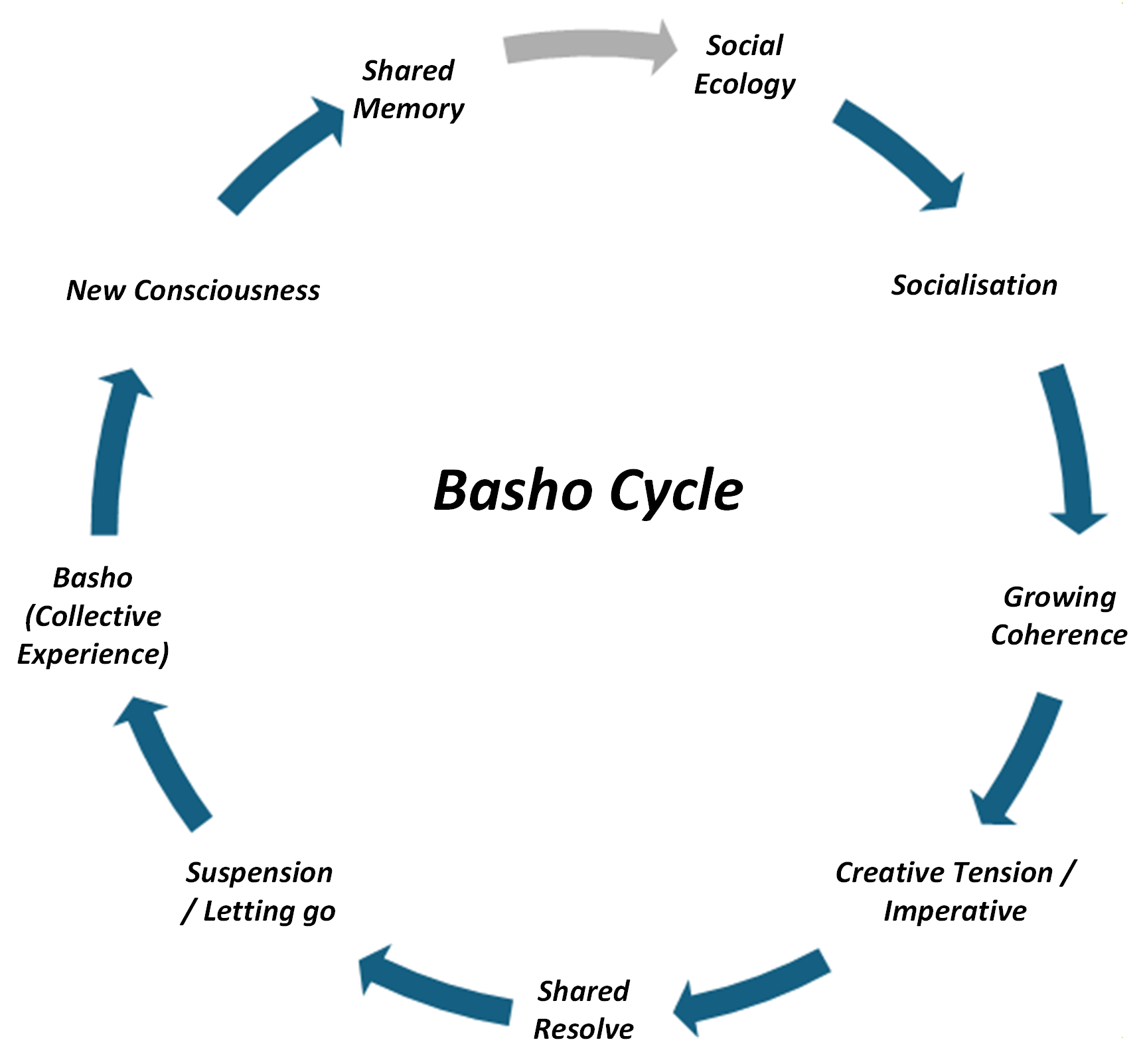
Figure 1: Basho cycle – Emergence of Collective Consciousness
-
Social Ecology
The cycle begins with a healthy social ecology. Like a field in nature, a social ecology is a living field of relationships, interactions, meanings, stories, norms, and shared experiences within which coherence, cooperation, and collective action emerge. Through these dynamics, groups learn, adapt, create shared meaning, and respond to their environment.
Within an organisation, the social ecology should be reasonably healthy. This is the organisation as it exists at present. Some or all of these could be challenged in the next step.
Consider these as preconditions. If these are not in place, then attempting to get to Basho could be very challenging:
Shared Meaning, what we are here to do and how we understand the world.
- Shared mental models of our environment. This includes for our Basho the boundaries within which we are working:
- Shared purpose, a clear reason for us to be together, and a shared vision for what we want.
-
-
- Distinction – what we are dealing with and, equally importantly, what we are not dealing with.
- System – where the system we are considering sits within the greater whole and what we regard as its essential components.
- Relationships – within our world, which relationships are we concerned with?
- Perspectives – which viewpoints, roles, interests, and information needs do we need to take into account?
-
Ethical Rules of Engagement – how we will behave.
- Relationships built on mutual respect.
- Expected mindsets of curiosity, humility, openness, and willingness to learn.
- What will and will not be accepted as behaviour.
- Willingness to test assumptions and challenge ideas without attacking individuals.
Accumulated History – what has already happened individually and collectively.
- Shared stories and narratives.
- collective memory
- shared experience
Like a natural ecosystem, a social ecology develops over time. Every conversation, challenge, success, failure, and act of trust contributes to its health and growth. As the ecology matures, the conditions for coherence, learning, and ultimately Basho become increasingly possible.
As the social ecology matures, so too does coherence.
-
Socialisation
People begin to share language, understanding, and meaning. In the context of the meeting, each gives their unique perspective, their experiences, assumptions, and what they have learned. What they see as important.
Socialisation occurs through many forms of interaction that allow participants to share perspectives, challenge assumptions, communicate meaning, and test understanding against reality.
- This is an opportunity for reframing to get a shared understanding and set the stage.
Through dialogue, participants test and refine the distinctions, systems, relationships, and perspectives established in the previous step. Assumptions are challenged, boundaries are reconsidered, and new insights emerge.
In socialisation, these tools and techniques are invaluable to communicate experience and shared memories.
- Storytelling
- Dialogue
- Mind mapping
- Visual medium
- Dance and song.
As always, it should happen in Gemba, the place where everything can be tested against reality.
Encourage both personal and group reflection.
-
Growing Coherence
Growing Coherence is the process through which participants develop sufficient shared understanding, trust, and alignment to work together effectively.
As people continue to share and listen to one another’s stories, perspectives begin to shift. Understanding deepens, common ground emerges, and participants begin to see beyond their individual viewpoints. A shared language develops, and mutual trust and respect grow.
Coherence should not be confused with alignment, or even agreement. Individuals may disagree strongly and still possess a high degree of coherence if they understand one another, share sufficient meaning, and can work together productively.
Basho is a distinct phenomenon. It is a transient collective experience that may arise when people achieve shared understanding, awareness, and resolve. Coherence peaks and participants temporarily transcend individual perspectives in pursuit of a shared understanding or purpose.
-
Creative Tension/ Imperative
There is a flow of ideas and alternatives. Different opportunities, aspirations, and priorities lead to tension and heightened resolve to act. This results in what Robert Fritz calls Creative Tension, the energy generated between current reality and a desired future.
-
Shared Resolve
When a group develops a shared resolve to address that tension and move toward a solution they can all live with. Shared resolve creates the commitment to move forward.
-
Suspension/ letting go.
The realisation that there is no single option they unanimously agree on, and that they have to find a new way. Suspension creates openness to discover a path not yet visible. Participants suspend assumptions, let go of certainty, and become genuinely open to what might emerge.
-
Basho (Collective Experience)
Basho is not created by the meeting itself. It emerges from the accumulated history of interactions, experiences, trust, and shared meaning that precede the meeting.
Basho is a transient collective experience that may arise when people achieve shared understanding, awareness, and resolve. Coherence peaks as participants temporarily transcend individual perspectives in pursuit of a shared understanding or purpose.
In such moments the group experiences an unusual sense of unity, clarity, and oneness.
Only then can Basho arise.
- Basho is not a process.
- It is not a meeting.
- It is not a workshop.
- It is not the social field itself.
The experience may last only moments. Yet its effects can endure for years.
Basho does not exist before it happens. It is transient and emerges from the conditions that precede it.
-
New Consciousness
When it passes, it leaves behind something valuable. A new consciousness emerges from the experience. The group sees reality differently than before.
-
Shared Memory
The experience becomes shared memory.
From the shared memory and experience, everyone is touched, and the social ecology is enriched, ready for the next cycle.
- Future learning becomes possible.
- Future Basho becomes more likely.
The Basho Cycle proposes that collective consciousness does not arise from information alone.
It emerges from lived experience within a healthy social ecology.
Just as fertile soil supports new growth, a healthy social ecology creates the conditions from which new understanding can emerge.
Although the experience may be fleeting, the consequences can last a lifetime.
Explore further
This article connects to the broader framework:
- Ethical Domain — how constraints shape decisions
- Sensemaking Domain — how organisations interpret reality
- Relational Domain — how trust and coordination emerge
- Learning Domain — how knowledge is created and tested
- Action Domain — how intent becomes capability
To understand more on Purpose detailed Subject Areas, visit the Deep Dive section.