Introduction
Activity-Based Costing (ABC) helps explain how resources are used to generate value within an organisation. Traditional accounting assigns costs to units such as departments or cost centres, but this often provides limited insight into actual activities. Instead of asking “Which department incurred the cost?”, ABC focuses on “What work was done and at what cost?” by linking costs to specific activities and tasks. This approach provides organizations with a clearer picture of resource consumption, value creation, and potential areas for improvement.
Why Activity Based Costing Matters
Every organisation undertakes various tasks, such as processing applications, evaluating risks, responding to customer queries, maintaining equipment, developing products, and solving problems. These activities require time, effort, and resources. Without clear visibility into the work being done, organisations often find it difficult to understand:
- Where resources are being consumed.
- Which activities create value.
- Which activities create waste.
- How costs accumulate.
- Whether investment aligns with strategic priorities.
ABC provides that visibility.
It creates line of sight between organisational purpose and resource consumption.
Activity Based Costing and the Knowledge Base
Within the ASF framework, ABC is not a standalone financial technique.
It forms part of a broader Knowledge Base that links:
- Capabilities
- Processes
- Activities
- Tasks
- Costs
- Outcomes
This allows organisations to understand not only what work is performed but how that work contributes to stakeholder value.
Value Streams and Value Creation
Customers do not perceive organisational structures; instead, they experience value streams. A value stream illustrates the entire flow of value, from stakeholder requests to their desired outcomes. For example, in a loan origination process, the customer observes a series of capabilities working together to deliver a loan. These include Lead Management, Application Assessment, Credit Approval, Documentation, Account Activation, Settlement, and Drawdown. Each capability plays a role in creating value, performing activities that consume resources and incur costs. ABC offers transparency into these costs across the whole value stream.
See the example Value Stream in Figure 2 below.
This enables organisations to understand not simply the cost of individual departments but the cost of delivering value.
The Activity Hierarchy
ABC relies on a simple but powerful hierarchy.
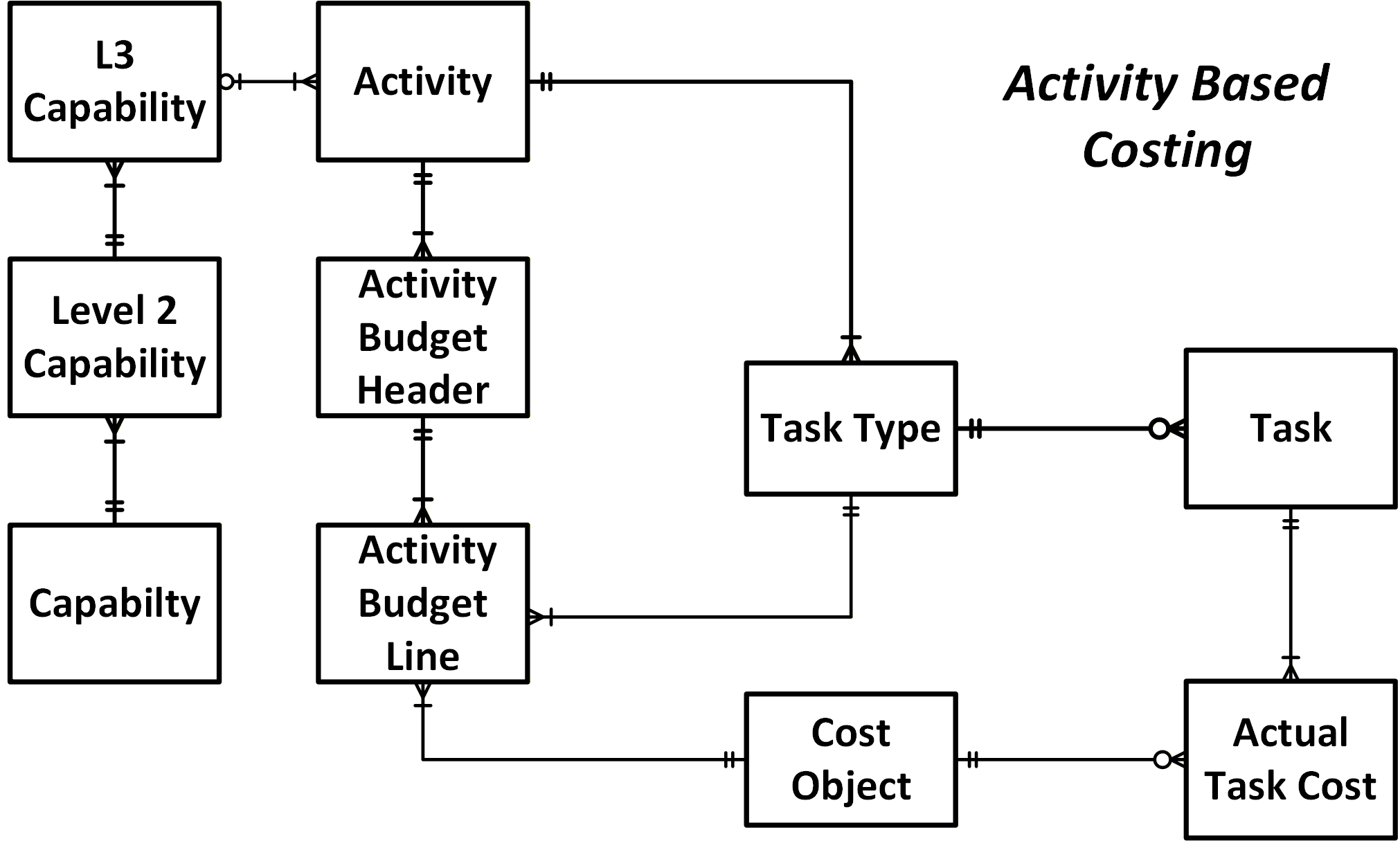
Figure 1: Data Model for Activity Based Costing
L3 Capability
- Capability Id
- Capability name
Capabilities describe what the organisation does.
Examples include:
- Credit Assessment
- Product Management
- Customer Service
- Procurement
Capabilities are stable over time. Level 3 is where activities are defined as well as business data entities and KPIs.
Activity
- Activity Id
- L3 Capability Id
- Activity Name
- Effective From / To
Activities describe the work required to deliver a capability.
Examples might include:
- Assess Application
- Verify Documentation
- Evaluate Risk
- Prepare Settlement
Activities provide the primary planning and budgeting unit within the ABC model.
Task Type
Task Types represent standard categories of work performed within an activity.
Task Type Standard Cost
with:
- Task Type Id
- Period Id
- UOM
- Standard Cost / UOM
- Resource Type
- Effective From / To
Examples:
- Initial Assessment
- Reassessment
- Exception Review
- Quality Review
Task Types provide a common classification structure for workload analysis and budgeting.
Task
The Task entity:
- Task Id
- Task Type Id
- Task Name / Description
- Planned Date
- Execution Date
- Actual Quantity
- Actual Cost
- Status
Tasks denote actual work done. Each task uses resources and incurs costs. They serve as the operational evidence from which workload and cost details are obtained.
Budgeting Activities
Activities form the bridge between planning and execution. In the data model in Figure 1 these are captured in Activity Budget Header, one for each budgeting period and it contains Activity Budget Line Item, one for each Task Type and its Cost Object components.
Activity Budget Header
- Activity Budget Id
- L3 Capability Id
- Activity Id
- Work Container Id
- Period Id
- Budget Version Id
- Budget Status
Activity Budget Line
- Activity Budget Line Id
- Activity Budget Id
- Task Type Id
- Planned Quantity
- UOM
- Standard Cost / UOM
- Planned Cost
Cost Objects examples:
- Product
- Customer segment
- Supplier
- Project
- Standing work program
- Asset
- Service
- Stakeholder outcome
- Environmental obligation
- Community initiative
The organisation determines how much investment it intends to allocate to a particular activity.
For example:
Activity: Credit Assessment
Annual Budget: $2,000,000
The budget may then be allocated across multiple Task Types.
This creates an explicit relationship between planned expenditure and expected workload.
Actual Costs
When work is performed, Tasks generate actual costs.
Actual costs may include:
- Labour
- Contractors
- Systems
- Infrastructure
- Materials
- External services
These costs can then be compared with planned activity budgets.
This provides visibility of:
- Budget variance
- Workload variance
- Resource utilisation
- Emerging demand patterns
Cost Objects
Cost Objects represent the destination of cost allocation.
Examples may include:
- Products
- Services
- Customers
- Projects
- Business Units
- Value Streams
ABC enables organisations to trace costs from tasks back to the objects that consume value.
This provides a more accurate view of organisational economics than traditional departmental accounting approaches.
Activity Based Costing and Business Process Management
Business Process Management (BPM) and Activity Based Costing (ABC) are complementary disciplines. BPM describes how value is created, while ABC explains the cost of creating that value. Business processes map the flow of work, and ABC measures the resources used during these activities. Together, they offer a clear view of operational and financial performance.
Business Process maps are often expressed as value streams. Here is an example for Loan Origination:
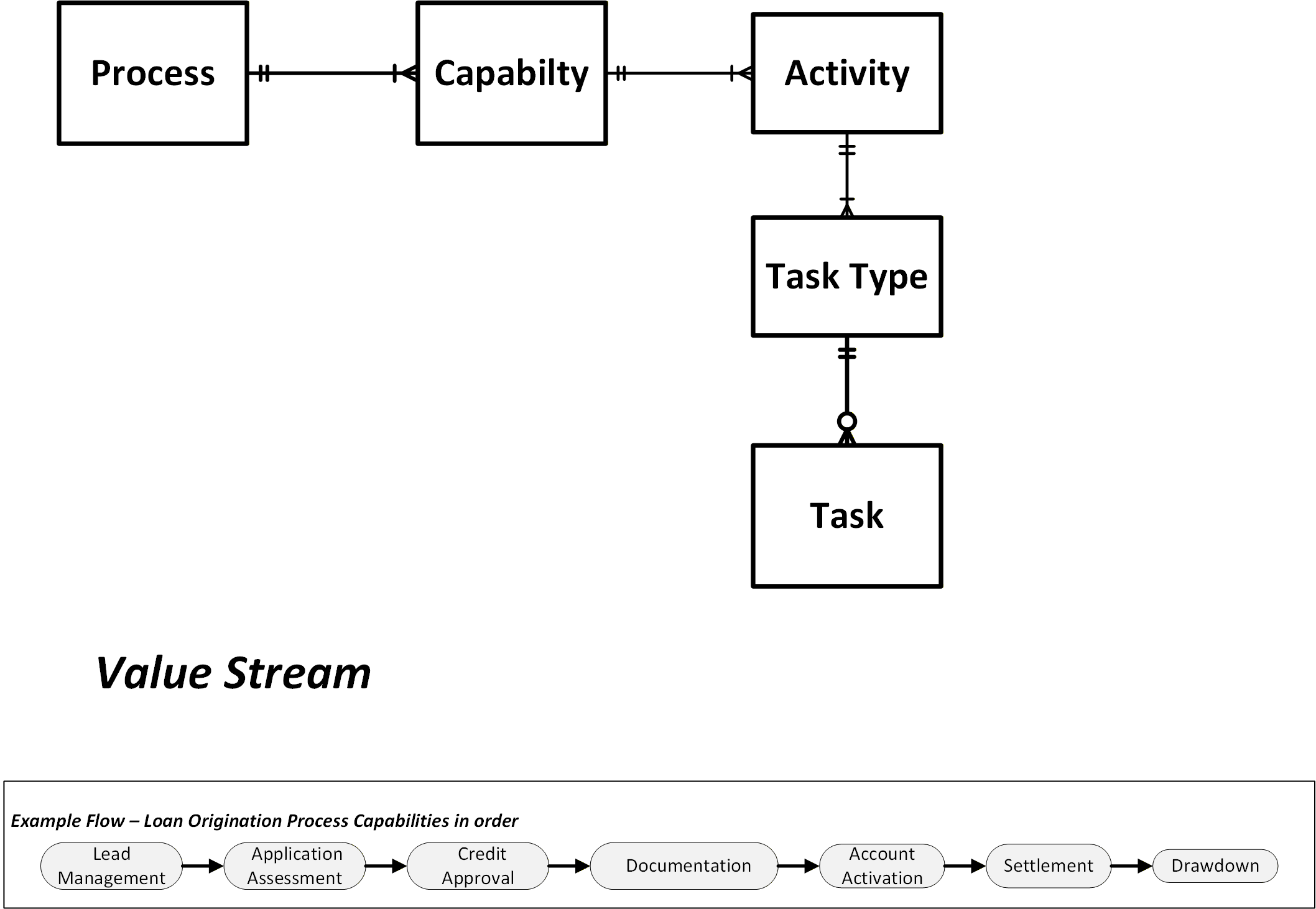
Figure 2: Value Stream data model and example
ABC as a Learning System
The primary benefit of Activity Based Costing (ABC) often isn’t just the cost data it provides. Instead, ABC offers visibility into operations. This visibility fosters awareness, which in turn uncovers opportunities for enhancement. When individuals can identify where effort is spent, where bottlenecks form, and how costs build up, they are more equipped to optimize the system. Thus, ABC goes beyond being merely a financial management instrument; it functions as a tool for organizational learning.
ABC helps organisations connect work, cost, value and consequence, providing a foundation for continuous improvement, adaptive learning and informed decision making.
Key Takeaway
Activity Based Costing (ABC) reveals the economics behind value creation. By connecting capabilities, activities, tasks, and costs, ABC creates a clear view of how organizational purpose, operational tasks, and stakeholder outcomes are linked. In the ASF framework, it acts as a vital bridge connecting the Knowledge Base, Business Process Management, reporting, and adaptive learning.
Explore further
This article connects to the broader framework:
- Ethical Domain — how constraints shape decisions
- Sensemaking Domain — how organisations interpret reality
- Relational Domain — how trust and coordination emerge
- Learning Domain — how knowledge is created and tested
- Action Domain — how intent becomes capability
To understand more on Purpose detailed Subject Areas, visit the Deep Dive section.