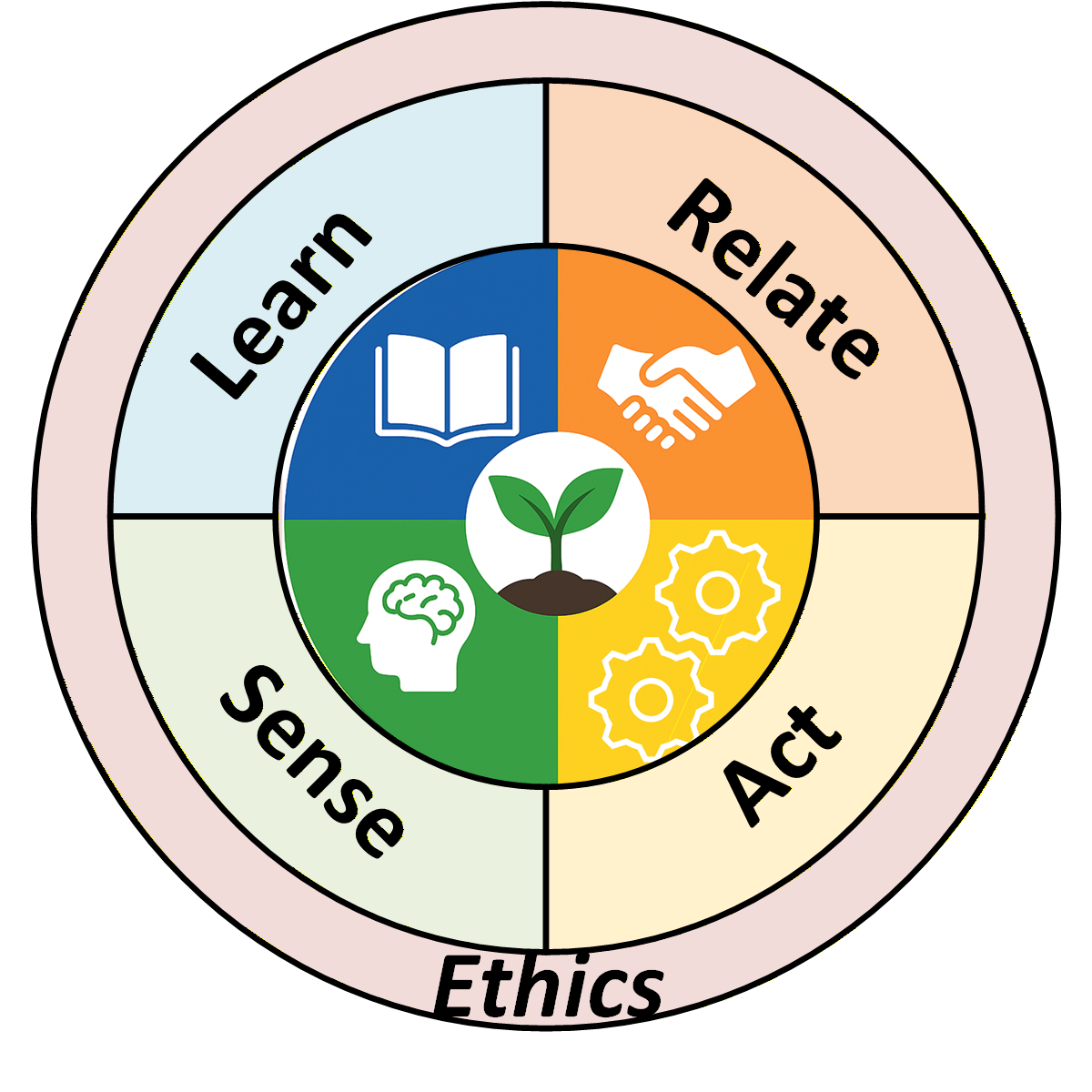
Part of the Adaptive Capacity model → View full model
Learning Domain
How organisational learning actually forms (and fails)
Learning is not the accumulation of knowledge.
It is the ongoing ability of an organisation to adapt its behaviour through shared experience, reflection, and application.
In complex environments, learning does not follow instruction.
It emerges through interaction, tension, and practice.
If learning stops, adaptive capacity collapses.
🚩 Red Flags (Early Warning Signs)
- Knowledge is documented but not used
- Models are delivered but not challenged
- People comply but do not contribute
- Learning is treated as training
- Silence increases under pressure
These indicate that learning has been replaced by the performance of knowledge.
Pattern Set
🧩 Socialisation Creates Learning
Learning begins with shared experience, not information.
Socialisation is where tacit knowledge is formed—through observation, dialogue, and real work in context. It is not communication; it is experience under consequence.
But socialisation does not occur anywhere.
It requires a field.
Ba is the shared space where interaction becomes meaningful.
Basho defines its boundary—purpose, ethics, and what is allowed to be said.
Without Ba, interaction is noise.
Without Basho, it is unsafe.
When the field is present, people test judgement in context.
When it is absent, knowledge is not internalised—it is only circulated.
From a SECI perspective, socialisation is the entry point.
If it weakens, the learning cycle does not degrade — it collapses.
Like soil degradation, capability loss is often invisible—until it matters.
Socialisation is where learning begins.
It connects knowledge to reality, within a shared field.
Without it, knowledge does not endure.
Most organisations don’t lose knowledge.
They lose the conditions that make it usable.
SECI: Not a Knowledge Model — A Learning System in Motion
SECI as Learning Throughput — The Engine of Adaptive Capacity
Why Organisational Learning Becomes Fragile — Even When Everything Looks Right
Ba / Basho → Field Conditions for SECI
Social Media, Tacit Knowledge, and the Missing Link
For a deeper dive:
Subject Area – The Learning Environment
Subject Area: Most organisations think they are learning. They’re not.
Subject Area — Gemba: Where Learning Becomes Real
Subject Area: Building Resilience through Social Ecology
🧩Deliberation Must Be Triggered
Reflection does not happen by default.
It must be activated.
In the flow of work, people act, respond, and move on.
Without deliberate pause, experience passes without learning.
Deliberation creates the space to question:
What happened? Why? What will we do differently?
Without it, organisations accumulate activity, not insight.
Deliberation triggers learning by interrupting momentum.
Without it, experience is lost.
Hansei — Reflection That Forces Correction
Questioning — The Discipline That Prevents Organised Self-Deception
🧩 Voluntary Contribution Is the Signal
Learning is visible when people contribute
without being asked.
Mandated participation produces compliance.
Voluntary contribution reveals engagement, ownership, and trust.
When people offer insights, challenge assumptions, and share experience unprompted, learning is occurring.
- Silence is a signal.
- So is forced participation.
Voluntary contribution is the clearest indicator that knowledge is alive.
Psychological Safety — Why People Stay Silent
Learning Must Become Judgement in Action
- Learning creates insight.
- Reflection creates awareness.
- Structure creates consistency.
But none of these are sufficient on their own.
Only when learning becomes judgement in action does capability stabilise.
Learning without judgement creates instability.
Judgement without consequence creates illusion.
🧩Do Not Over-Codify Too Early
Structure brings clarity—but too early, it freezes learning.
Premature codification locks in partial understanding,
turning evolving insight into fixed rules.
What is written too soon becomes defended too quickly.
Learning requires space for ambiguity, iteration, and correction.
Codify after patterns stabilise—not before.
Over-codification creates fragility by replacing learning with compliance.
When Documentation Kills Learning
🧩 Practical Wisdom Enables Learning
Learning must translate into judgement, not just process.
Knowing what to do is not enough.
Knowing when, why, and how to adapt is what stabilises performance.
Practical wisdom is formed through experience, consequence, and reflection.
Without it, organisations rely on rules, scripts, and escalation.
With it, people act with confidence under uncertainty.
Learning stabilises when it becomes judgement in action.
🧩 Reflection Without Consequence Creates Instability
Reflection alone is not enough.
It must lead to judgement.
Without consequence, reflection becomes narrative.
Without decision, it becomes theatre.
Organisations can appear reflective—running reviews, capturing lessons, documenting insights—while behaviour remains unchanged.
Learning requires choosing what will change,
and what will no longer be done.
Reflection without judgement creates motion without direction.
🤿 Subject Areas
Subject Areas provide deeper and more structured exploration of specific disciplines, practices, and modelling approaches referenced throughout the pathways and Source Notes