📝 Business Capability Model — A representation of what an organisation does, independent of structure, people, or technology.
One of the two key Enterprise Architecture models used in this body of work. Enterprise architecture (EA) models serve as the organisation’s blueprint, similar to how traditional architectural and engineering plans depict the design details of structures like buildings and bridges. These models offer a valuable way to ‘visualise’ the system as a whole. In the EA context, ‘the system’ refers to the entire organisation.
Two of these are fundamental. The BCM describes what the business does, while the CDM indicates what the business deals with. Do not confuse these with process models, which outline ‘how the business does it,’ or system maps that show ‘how data is produced from one system as an output and flows to another as an input’ when a specific process is followed. The core of the ‘what’ models remains very stable, whereas the ‘how’ models continually evolve as they are subject to ongoing improvement and new technological system implementations. The following is a stylised example of a BCM for a fictional business. This example of a BCM provides an idea of what the model looks like and the coverage across the whole organisation. Most real BCMs I have worked with fit on an A3 page and tend to be much more complex.
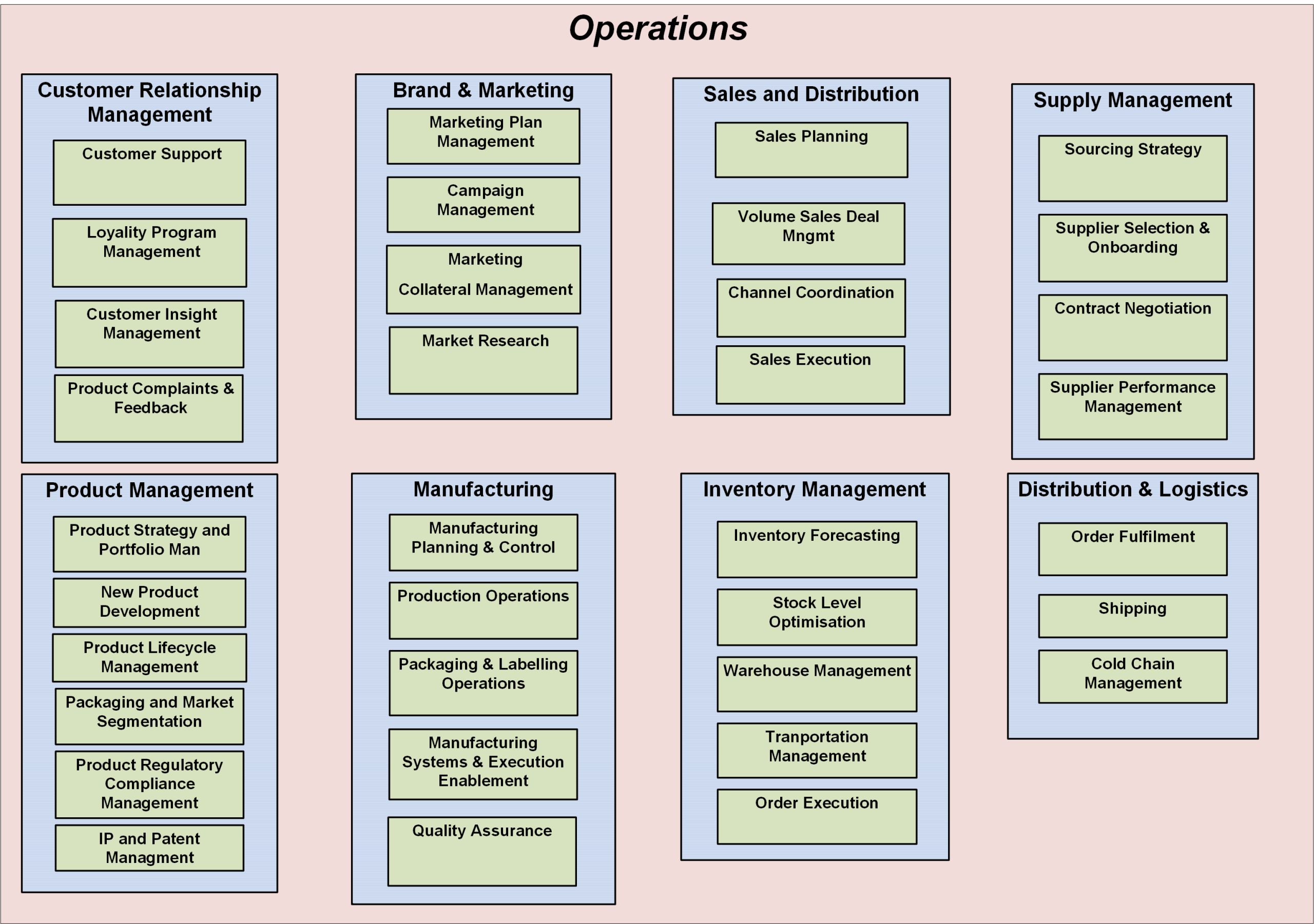
Figure 1: A subset of the Business Capability Model for NaturFlourish
Bruno’s journey in developing a BCM using AI, then applying it in the workplace, is a key theme throughout Adapt, Survive and Flourish and Learn, Transform and Navigate.
For more on this journey read the two books and look at:
For a deeper understanding of Business Capability Modelling and Enterprise Architecture see:
- Business Capability Modelling — Beyond Organisational Charts and Process Maps
- Enterprise Architecture as a Sensemaking Lens
- Source Note: Enterprise Architecture – The Language of Business Design
- Subject Area: Business Capability Model — Structuring What the Organisation Must Do
- Subject Area: Enterprise Architecture — Foundation of Shared Knowledge
- Structured Sensemaking System