Strategic Thinking and Design Thinking are complementary, not sequential — both operate as cycles with feedback loops.
- Strategic Thinking → A cycle deciding where and why to act.

- Design Thinking → A cycle determining how action takes form.
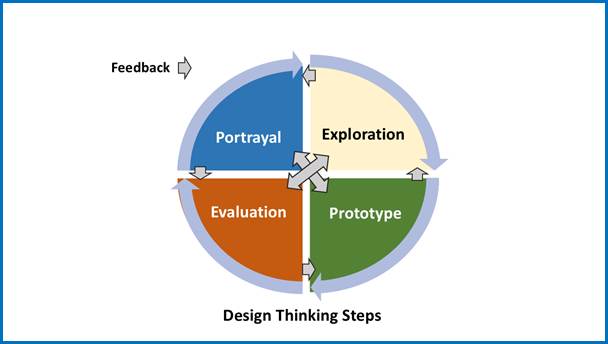
🔗 Strategy–Design Interaction
Strategy and Design are not sequential steps — they are mutually dependent and continuously interacting.
- Strategy expresses intent — what the organisation seeks to achieve.
- Design expresses form — how that intent takes shape in reality.
👉 The dependency:
- Strategy depends on design to evaluate what is feasible.
- Design depends on strategy to provide direction and constraint.
- Both operate within Basho — defined by purpose, ethical boundaries, and capability structure.
👉 The interaction:
- Design exposes constraints, trade-offs, and unintended consequences.
- Strategy adjusts based on what is learned through design and action.
- Neither remains stable — both evolve through use.
👉 This means:
- Strategy is provisional, not fixed.
- Design is exploratory, not final.
- Alignment emerges through iteration, not planning.
👉 Without this interaction:
- Strategy drifts into abstraction
- Design optimises locally without direction.
- Execution disconnects from intent.
👉 Result:
Direction and form co-evolve through interaction with the system
🧠 Shared Mental Models
Strategy and Design are both expressions of shared mental models:
- Strategy reflects how the organisation understands its environment and purpose.
- Design reflects how the organisation understands its capabilities and constraints.
👉 Their interaction:
- Surfaces differences in understanding
- Forces negotiation of meaning
- Strengthens or reshapes the shared mental model.
👉 Without this:
- Agreement is superficial.
- Misalignment remains hidden.
- Fragility increases
🔄 Learning Loops Across Strategy–Design–Action
Learning does not occur within Strategy, Design, or Action alone —
it emerges through their continuous interaction within the system.
- Strategy proposes direction
→ based on the current shared mental model. - Design tests that direction
→ exposing constraints, trade-offs, and feasibility. - Action produces outcomes
→ through intervention in the real system. - Learning feeds back into both
→ reshaping the shared mental model and subsequent decisions.
🧠 What is actually happening
This is not a linear flow — it is a cycle of validation and refinement:
- Strategy is provisional until tested.
- Design is exploratory until enacted.
- Action is incomplete until outcomes are observed.
👉 Learning occurs when:
- outcomes diverge from intent.
- constraints become visible.
- unintended consequences emerge.
🔗 Connection to Shared Mental Models
- Strategy reflects the current shared understanding.
- Design challenges and refines that understanding.
- Action exposes what the organisation did not understand.
👉 The loop:
Shared mental model → tested → reshaped → strengthened (or corrected)
🧭 Fit within the Knowledge Operating System (KOS)
Strategy and Design operate within the Knowledge Operating System as mechanisms of intent and realisation.
- Basho (Purpose + Ethics + Capability boundaries)
→ defines what is valid and acceptable. - SECI
→ Externalisation (strategy articulation)
→ Combination (design structuring)
→ Internalisation (learning through action) - Gemba
→ where outcomes are observed and learning is grounded.
👉 Key insight:
Learning loops are the mechanism through which the Knowledge Operating System adapts.
⚠️ Without effective learning loops
- Strategy remains untested.
- Design becomes detached from reality.
- Action becomes repetitive activity.
- Shared understanding becomes increasingly inaccurate.
👉 Result:
The organisation believes it is learning — but is not adapting
👉 This creates:
- Continuous refinement.
- Reduction of fragility.
- Increasing coherence over time.
🌱 Fit within Organisational Ecology
- Strategy = direction of adaptation
- Design = mechanism of interaction
- Action = engagement with the environment
- Learning = adjustment to maintain fit
👉 Their interaction:
- Determines how the organisation adapts.
- Shapes relationships with stakeholders
- Influences resilience and fragility
👉 Without this:
- The organisation becomes maladapted.
- Local efficiency undermines system health.
- Fragility increases under pressure.
🔥 Key Principle
- Strategy without design remains intent.
- Design without strategy lacks direction.
- Their interaction exposes constraints, trade-offs, and consequences.
- Learning from action reshapes both.
Strategy sets direction. Design tests it. Reality reshapes both.
Trackbacks/Pingbacks