📝 Dialogue, Dialectic & Debate: Conversation types are used for different purposes in advocacy and enquiry in the quest to seek truth and understanding.
Organisations rely on conversations to exchange information, challenge assumptions, make decisions, and build shared understanding. Dialogue, dialectic, and debate each serve a distinct purpose and are most effective when used consciously and appropriately.
They also have different mindsets and outcomes.
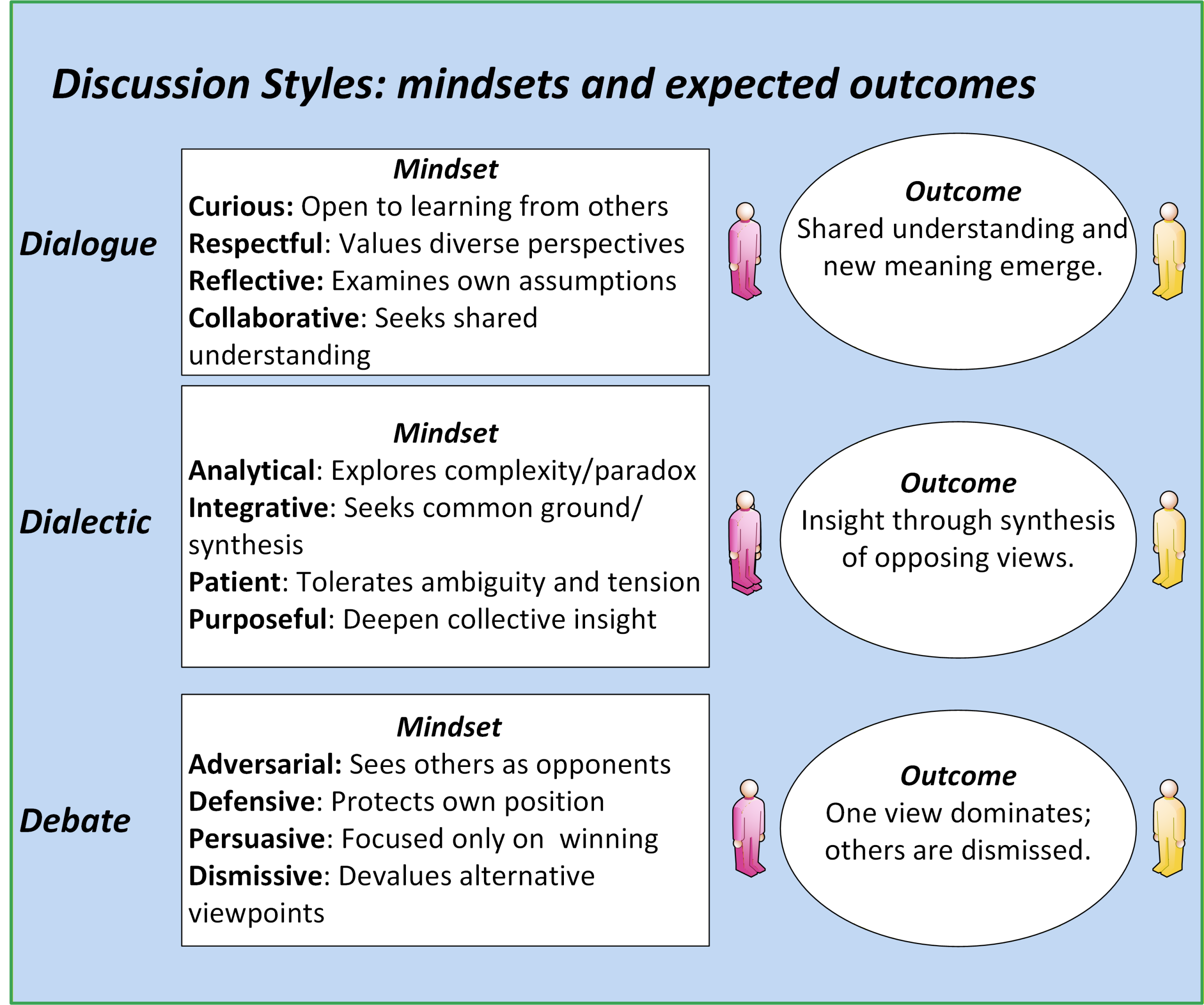
Dialogue seeks shared understanding. Participants suspend judgement, listen deeply, and explore different perspectives together. The goal is not agreement but greater understanding.
Dialectic explores contrasting viewpoints to reveal assumptions, tensions, and new possibilities. Through the interaction of different perspectives, participants may develop a deeper or more integrated understanding.
Debate involves advocating for and defending a position. It is useful when alternatives need to be evaluated, decisions made, or competing arguments evaluated. The goal is persuasion, selection, or judgement.
Problems occur when individuals choose the inappropriate conversational mode for the situation. A discussion intended to foster shared understanding can quickly escalate into a debate. Conversely, a decision that needs commitment might be postponed due to prolonged dialogue.
Effective leaders, facilitators, and teams understand the strengths and limitations of each conversational approach and use them intentionally.
Related Glossary Items
- Mindsets
- Sensemaking
- Shared Mental Models
- Psychological Safety
- Trust
- Adaptive Capacity
- Basho
Related Source Notes
- Dialogue vs Debate
- Source Note – Scharmer’s Theory U, Sensemaking and SECI
- Shared Mental Models
- Meaning Emerges Through Interaction
- Politics Replaces Sensemaking
- Source Note — Ecocentric vs Egocentric Thinking
- Source Note: The Ego as the Engine of Inertia
- Source Note — Converting Compliance into Contribution
- In Complex Environments, Framing Errors Are Structural
- Hansei — Reflection That Forces Correction
Related Subject Areas
- Subject Area: Trust — The Key to Cohesion, Learning and Contribution
- Subject Area: Organisational Ecology
- Subject Area — Feedback