Framing Insight
Many organisations assume that learning emerges automatically once information is exchanged.
It does not.
People can:
- view the same training video,
- attend the same meeting,
- sit in the same lecture,
- use the same systems,
- read the same reports,
and still leave with fundamentally different understandings of reality.
The difference is often not the information itself. It is the quality of the relational environment in which interpretation occurs.
Japanese theorists use the term Ba to describe the relational space where meaning, coordination, learning, and shared understanding develop. More recent Ba research increasingly views Ba not simply as “context,” but as an active social field that shapes how people interact, interpret situations, and position themselves in relation to others.
This matters because organisations operating in stable environments can often function reasonably well with limited coordination and largely transactional interactions. However, as uncertainty, ambiguity, and complexity increase, deeper levels of relational coherence become increasingly important.
In complex environments:
- learning depends on trust,
- adaptation depends on dialogue,
- and shared mental models depend on the quality of the social field.
From Context to Field
Recent Ba theory research argues that interaction should not be viewed simply as communication between isolated individuals. Instead, interaction emerges within a shared relational field.
Hanks et al. (Hanks et al., 2019) describe Ba not just as a communication space, but as an interactional environment where meaning emerges through relationships, shared experiences, and continuous interaction. From this viewpoint, individuals are not seen as isolated entities exchanging information across static boundaries. Instead, understanding emerges through the quality of connections, shared context, and continuous interaction between participants.
This differs significantly from many Western communication models, which often assume that communication occurs between separate individuals who transfer information across defined interfaces. Ba theory instead emphasises co-presence, participation, relational awareness, and the idea that people are deeply connected to the social environment in which meaning develops.
Ba becomes operationally observable when examining how groups interact, learn, and develop Shared Mental Models. It reflects the relational conditions that enable collective learning and shared understanding to emerge.
This environment includes psychological safety, mutual trust, respect, openness, and a sense of belonging. It also enables people to challenge assumptions, raise concerns, and explore new ideas openly. It supports the level of connection and coherence needed for meaningful dialogue, shared experience, and the gradual development of common understanding.
Over time, groups develop a shared language, collective interpretations, and mutual understanding of emerging ideas and assumptions. In this sense, Ba helps explain how understanding develops between people rather than simply within individuals.
This makes Ba particularly useful for organisational analysis, learning, sensemaking, and the development of adaptive capacity.
Levels of Ba — Depths of Organisational Coherence
Organisations appear capable of operating across different Ba states, depending on factors such as the context of use, social capital, trust, shared language, learning quality, psychological safety, and adaptive coherence.
These should not be viewed as rigid maturity levels. A healthy, resilient organisation can move dynamically between Ba states depending on circumstances, pressures, leadership behaviour, and the nature of the work.
| Ba State | Organisational Expression |
| Transactional Ba | Basic coordination, information exchange, procedural interaction |
| Operational Ba | Shared workflows, common language, routine collaboration |
| Learning Ba | Active dialogue, shared reflection, coupled SECI cycles, knowledge movement |
| Relational Ba | Trust, vulnerability, psychological safety, and stronger social capital |
| Generative Ba | Co-creation, emergence of new ideas, adaptive insight, innovation |
| Presencing Ba | Deep mutuality, suspension of assumptions, transformative coherence |
| Basho* | Foundational ontological/contextual ground enabling coherence itself |
*Basho and Ba
In simple terms, Basho refers to a much deeper philosophical idea associated with the underlying ground or “space” within which meaning and experience become possible. It operates at a highly ontological level and is rarely observable directly within organisational life.
Ba, by contrast, is far more practical and observable. It refers to the lived relational field that emerges between people through interaction, shared experience, trust, dialogue, and mutual orientation. In organisational settings, Ba can be seen in the quality of relationships, the degree of coherence between people, and the capacity for shared understanding and learning to emerge.
For this reason, this work primarily uses Ba when discussing organisational learning, shared mental models, social fields, and adaptive capacity. Basho is only referenced when exploring the deepest levels of presencing and ontological grounding.
Ba and Theory U

Figure 1: Otto Scharmer’s Theory U
Figure 1 presents an adapted interpretation of Otto Scharmer’s Theory U framework, reframed through the lenses of organisational learning, sensemaking, and the SECI knowledge-creation model. Rather than presenting transformation as a purely linear leadership process, this interpretation emphasizes the progressive deepening of awareness, dialogue, relationships, and action within a social field.
For more detail see: Source Note – Scharmer’s Theory U, Sensemaking and SECI
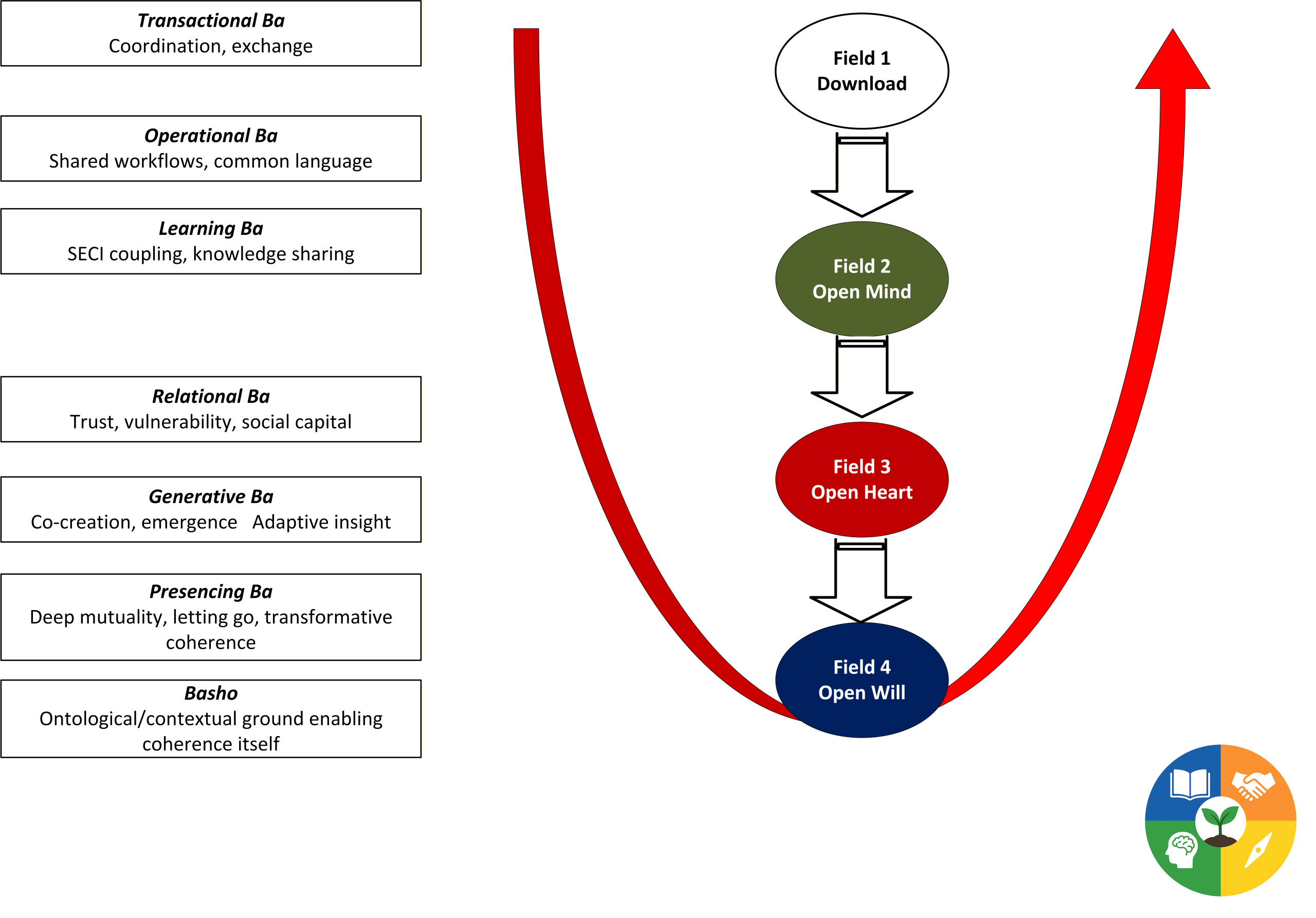
Figure 2: Based on Otto Sharmer’s Theory U
Interesting resonances also emerge between Ba states and Otto Scharmer’s Theory U field conditions.
This should not be interpreted as exact equivalence. Rather, progressively deeper Ba states appear to resonate with progressively deeper field conditions within Theory U.
| Theory U Field | Ba Resonance |
| Downloading | Transactional / Operational Ba |
| Open Mind | Learning Ba |
| Open Heart | Relational Ba |
| Open Will | Generative / Presencing Ba |
| Presencing | Closest resonance with Basho-like coherence |
As groups engage more deeply with the U-process, the significance of the relational field increases. In the initial stages, coordination can often be achieved through procedures, authority, expertise, or information sharing.
Transactional and operational Ba may suffice for routine tasks and stable settings. Yet, advanced organisational learning depends on developing deeper relational coherence.
As inquiry shifts from mere information exchange and debate to dialogue, reflection, emergence, and presencing, the social field needs to better accommodate uncertainty, diversity, and vulnerability.
This requires increasing levels of:
- suspension of assumptions,
- empathy,
- reflective listening,
- openness to challenge,
- mutual trust,
- psychological safety,
- vulnerability,
- and collective presence.
Listening quality also changes as groups move deeper into the process.
At shallow levels, listening is often transactional or confirmatory. People listen selectively for agreement, errors, risks, compliance, or opportunities to respond.
In highly egocentric or debate-oriented interactions, listening frequently becomes competitive rather than exploratory.
Participants listen for weaknesses to challenge, inconsistencies to expose, opportunities to defend their own position, or ways to score rhetorical points.
Under these conditions, conversational energy is directed toward advocacy, protection of identity, and positional victory rather than collective understanding.
This does not necessarily imply bad intent.
In many organisational environments, debate, defence, critique, and positional certainty are culturally rewarded behaviours.
However, these interaction patterns can significantly constrain deeper forms of learning, reflection, shared sensemaking, and adaptive coherence.
Deeper forms of learning require different forms of listening.
Participants increasingly need the capacity to:
- suspend premature judgement,
- remain present during discomfort or ambiguity,
- hear perspectives that challenge existing assumptions,
- and remain open long enough for new understanding to emerge.
This is far more demanding than a simple communication technique.
Listening is profoundly shaped by factors like mindset, emotional regulation, empathy, trust, identity, and psychological safety.
In highly egocentric contexts, listening tends to become defensive, positional, performative, or politicised.
Conversely, in more ecocentric environments, listening is more reflective, generative, relational, and system aware.
High-quality listening is challenging because it often requires individuals to temporarily detach from their need for certainty, status, expertise, or control.
Shallow listening usually results from seeking to confirm existing beliefs, defend positions, or prepare rebuttals.
In contrast, deeper listening involves reflection, relational connection, and generativity, where participants listen not only to words but also to what arises between them in the shared space.
Reflection likewise deepens.
Early reflection may focus mainly on technical correction or analytical refinement. Deeper reflection increasingly involves questioning assumptions, identity, purpose, relationships, and the meaning structures that shape action itself.
This helps explain why transformational learning often requires far more than analytical agreement.
It frequently requires:
- suspension,
- empathy,
- trust,
- vulnerability,
- and deeper forms of mutual presence.
Without these deeper relational conditions, groups often become trapped in debate, positional advocacy, defensive routines, or what Scharmer calls “downloading” — reinforcing existing assumptions rather than enabling genuinely new understanding to emerge.
Ecocentric and Egocentric Thinking
The quality of the organisational learning field is shaped not only by structures, processes, or facilitation techniques, but also by the underlying mindsets participants bring into the interaction itself.
Different mindsets appear to possess very different capacities for entering and sustaining deeper Ba states.
In this work, two broad orientations are used to help explain these differences: ecocentric thinking and egocentric thinking.
These orientations should not be interpreted as fixed personality states.
Individuals and organisations may shift between them depending on context, pressure, uncertainty, risk, and the nature of the situation itself.
For example, in genuinely chaotic environments such as bushfires, military operations, medical emergencies, or major incident response, highly directive command-and-control behaviour may become temporarily essential. This is Snowden’s Chaotic state, in which the act–sense–respond approach is used (Snowden & Boone, 2007).
Under these conditions:
- rapid coordination,
- clarity of authority,
- decisive action,
- and operational discipline may be critical for survival.
However, effective incident commanders do not rely on rigid control alone.
They remain heavily dependent on continual feedback, field intelligence, tacit knowledge, and warning signals from experienced personnel operating close to the reality of the situation.
As conditions stabilise, leadership often shifts back to more consultative, reflective, and collaborative forms of coordination.
The distinction is therefore not between “control” and “no control.”
Rather, it concerns whether leadership remains context-sensitive, reality-oriented, adaptive, and able to shift modes appropriately as conditions change.

Ecocentric thinking is primarily concerned with:
- what is right rather than who is right,
- understanding the wider system,
- maintaining relational coherence,
- learning collectively,
- and allowing new understanding to emerge through interaction.
Ecocentric participants are generally more capable of:
- suspending assumptions,
- listening reflectively,
- engaging vulnerably,
- tolerating ambiguity,
- and moving dynamically between different learning states as conditions evolve.
This creates greater capacity for deeper dialogue, generative interaction, and adaptive learning.
The following diagrams illustrate the mindsets used by ecocentric and egocentric leaders, respectively, in approaching fields.

Egocentric thinking is more strongly oriented toward:
- defensive certainty,
- identity protection,
- control,
- personal validation,
- and defending existing assumptions.
Under these conditions, interaction patterns often become:
- directive,
- debate-oriented, particularly when challenged by peers,
- adversarial in tone,
- performative,
- and/ or politically defensive.
Listening often becomes focused on rebuttal rather than understanding, while reflection tends to remain shallow and self-reinforcing.
Importantly, egocentric thinking can still be effective in highly procedural, rule-based, or tightly controlled environments where coordination depends primarily on compliance, authority, or technical execution.
However, it often struggles to sustain the deeper relational conditions required for:
- dialogue,
- generative learning,
- shared emergence,
- transformative insight,
- and presencing-level coherence.
This distinction becomes particularly important in conditions of uncertainty and complexity.
As environments become more ambiguous, interconnected, and rapidly changing, organisations increasingly depend upon:
- trust,
- dialogue,
- reflective learning,
- shared sensemaking,
- and collective adaptive capacity.
Under these conditions, the ability to move fluidly between different levels of learning and relational depth becomes increasingly important.
The conflict in Ukraine shows that egocentric and ecocentric moral frameworks should not be seen as fixed categories. In moments of urgent danger, decisive command-and-control actions may be needed. Yet, the key question is whether command remains grounded.
Russia’s more centralised command approach often prioritises obedience, control, and political narratives.
In contrast, Ukraine has combined disciplined command with decentralised sensing, mission command, civil society engagement, rapid technological adaptation, and frontline flexibility. This isn’t idealistic leadership but pragmatic, adaptable coherence under severe pressure.
The Gearbox Metaphors
The following figures use the metaphor of automatic and crash gearboxes to illustrate these differing learning orientations. The metaphor highlights how ecocentric thinking can move more fluidly between levels of inquiry and reflection, while egocentric thinking often becomes trapped at shallower levels of debate, positional defence, and downloaded assumptions.

Ecocentric Mindset — Automatic Transmission
In more ecocentric settings, organisational interactions tend to be more adaptive, reflective, relational, and context-responsive. Participants can still act decisively when needed, but interactions are less driven by defensive roles, identity protection, or the pursuit of certainty. Instead, greater focus is placed on attentive listening, distributed sensing, feedback, dialogue, and collective interpretation of evolving circumstances.
This does not mean leadership, authority, or discipline disappear. In highly volatile or risky situations, directive coordination may still be temporarily necessary. Yet, leadership remains linked to ongoing feedback from the wider organisational and environmental contexts. As stability returns, interactions can more naturally shift toward collaborative inquiry, reflection, and shared learning. Essentially, the organisation operates more like an automatic transmission: continuously sensing load, conditions, and feedback, and dynamically shifting between modes of coordination and learning, with less friction and more adaptive coherence.

Egocentric Mindset — Crash Gearbox
The metaphor of the “crash gearbox” is intentionally drawn from early manual transmission systems, dating to before the introduction of synchromesh gearboxes and, much later, automatic transmissions. These early gearboxes were difficult to operate smoothly and required significant driver skill, concentration, timing, and judgement to change gears successfully. Drivers often needed to “double declutch” — manually synchronising engine and gearbox speeds through conscious effort and experience to avoid grinding, jarring, or mechanical stress during transitions between gears. If you think a manual crash gearbox is a horror scenario for a driver who has only driven automatics, you’re right!
In highly egocentric settings, organisational interactions tend to become more forceful, defensive, and focused on control. While movements between different learning states or Ba may still happen, these transitions often involve friction, conflict, political tactics, or reliance on strong individual authority. Interaction styles typically turn directive, debate-driven, adversarial, performative, or politically defensive, especially when assumptions, expertise, or status are challenged.
Such environments can sometimes yield very high short-term performance under pressure or in competitive systems. However, they might also hinder weak-signal detection, diminish reflective listening, limit psychological safety, and restrict the organisation’s ability for deeper shared learning and adaptive coherence. Over time, the system may become increasingly dependent on control, certainty, and constant correction to remain stable, like a crash gearbox that requires ongoing driver intervention during difficult transitions.
Shared Mental Models and Ba Depth
This distinction helps explain why some shared mental models remain shallow while others become highly adaptive and generative.
| Organisational Activity | Typical Shared Mental Model Depth Required | Likely Ba Quality Needed |
|
Developing a common glossary or taxonomy
|
Shared terminology | Operational Ba |
|
Building an L1 Business Capability Model (BCM)
|
Shared workflows and interpretation | Learning–Relational Ba |
|
Developing a Common Data Model (CDM)
|
Shared interpretation | Relational Ba |
| Conducting scenario planning | Shared emergence | Generative Ba |
|
Designing a new customer experience using Design Thinking
|
Shared emergence | Generative Ba |
|
Developing strategy in uncertain conditions
|
Shared emergence and transformative insight | Generative–Presencing Ba |
|
Organisational transformation during crisis or disruption
|
Shared transformative insight | Presencing Ba |
Note: Generative Ba is needed for the following complex learning environment. Refer to the Adapt, Survive and Flourish Guidelines for details on Design Thinking and Strategic Thinking. See the Subject Area – Scenario Planning for more on that subject. All require ecocentric thinking to be successful.
Egocentric thinking does not really work here. Besides, if you have all the answers, why bother with exercises like these!
This helps explain an important organisational phenomenon that is often underestimated in traditional information-centric approaches to management and learning.
Two people may:
- read the same report,
- attend the same workshop,
- participate in the same meeting,
- use the same systems,
- and even work within the same organisational structures.
But still construct fundamentally different understandings of both the situation and the appropriate response.
This happens because information alone doesn’t define meaning. People don’t passively and mechanically absorb knowledge; instead, their interpretation is constantly influenced by previous experiences, emotions, professional roles, social connections, assumptions, motivations, trust, cultural norms, and the overall relational context of their interactions.
Shared information alone does not automatically create shared understanding. The state of the relational field is therefore crucial. When trust, psychological safety, reflective dialogue, mutual respect, and openness to learning exist, groups can develop deeper, more coherent shared meanings. Individuals become more willing to:
- surface uncertainty,
- challenge assumptions,
- listen reflectively,
- integrate diverse perspectives,
- and collectively adapt their mental models as conditions evolve.
In contrast, when conditions are highly defensive, politically charged, fear-driven, or strongly egocentric, the same information can be filtered through interests related to positions, protecting identities, status concerns, or internal politics. Such interactions may turn into debates, become performative, or involve selective attention, thereby diminishing the organisation’s capacity to develop deeper shared understanding and adaptive coherence.
This is one reason why organisational learning cannot be reduced to the transfer of information, training delivery, or access to knowledge repositories. The social and relational conditions surrounding interaction play a profound role in determining whether a meaningful shared understanding can emerge at all.
Relational Patterns and Shared Meaning
Research into cross-cultural interaction patterns provides further support for the importance of relational learning environments and Ba quality (Fujii et al., 2025).
Studies comparing interaction styles across multiple cultures have found significant differences in how groups:
- construct meaning,
- manage disagreement,
- coordinate understanding,
- and maintain relational coherence during interaction.
Some communication environments place a stronger emphasis on:
- assertion,
- individual position,
- direct advocacy,
- and debate-oriented exchange.
Others place greater emphasis on:
- relational awareness,
- contextual interpretation,
- collaborative completion,
- reflective listening,
- and the co-construction of shared understanding.
Importantly, these differences should not be interpreted as simple cultural strengths or weaknesses.
Rather, they reflect differing assumptions regarding:
- self and identity,
- relationships,
- authority,
- communication,
- and the role of interaction itself in creating meaning.
This becomes highly significant in complex, uncertain conditions. In stable or highly procedural environments, relatively shallow forms of coordination are often sufficient. People can follow procedures, exchange information, complete tasks, and maintain operational alignment without deep shared understanding.
However, as uncertainty, ambiguity, interdependence, and consequence increase, interpretation becomes progressively more important than procedure alone.
Under these conditions:
- fragmented mental models,
- poor listening quality,
- defensive interaction,
- weak relational trust,
- and degraded learning fields
can significantly impair organisational adaptation.
Conversely, stronger relational coherence can improve:
- shared sensemaking,
- adaptive learning,
- weak-signal sensing,
- feedback integration,
- and collective response capability.
This helps explain why social capital, trust, shared purpose, and deeper learning environments become increasingly important in complex and rapidly changing conditions.
A Critical Warning
Deep Ba states should not be romanticised or misunderstood as environments of perpetual harmony, consensus, or interpersonal comfort. Coherence is not the same as agreement, and healthy relational fields do not eliminate tension, disagreement, or challenge. In fact, the opposite is true; conflict needs to be encouraged and harnessed as a source of new ideas and to challenge the status quo. In many cases, deeper learning and adaptive capability depend precisely upon the organisation’s ability to engage constructively with discomfort, uncertainty, contradiction, and ethical tension without collapsing into defensiveness or fragmentation.
This distinction is important because relational quality can sometimes be confused with politeness, emotional positivity, or superficial consensus. However, environments that suppress dissent or avoid difficult conversations may gradually lose their capacity for reality testing and adaptive learning. Under these conditions, interaction can drift toward:
- conformity pressure,
- performative agreement,
- “Kumbaya theatre,”
- validation theatre,
- or forms of organisational monoculture where alternative perspectives become increasingly difficult to surface safely.
Adaptive organisations therefore require an ongoing balance between:
- coherence and challenge,
- trust and truth,
- connection and accountability,
- advocacy and inquiry,
- and psychological safety and reality testing.
Maintaining this balance is challenging because it demands that groups stay both relationally engaged and intellectually honest simultaneously. High-quality learning environments are not free of tension; instead, they can manage tension constructively without falling into fragmentation, fear, rigid control, or superficial agreement.
.
Organisational Ecology Perspective
Finally, from an organisational ecology perspective, Ba functions as the living social field within which:
- SECI learning cycles reinforce and build on one another,
- shared mental models emerge,
- learning flows more effectively,
- and adaptive capacity develops.
In this domain, knowledge isn’t simply transferred passively between individuals as static information. Instead, meaning continuously evolves through interaction, reflection, dialogue, experimentation, feedback, and shared experiences. The success of these interactions largely influences whether learning remains fragmented and transactional or develops into a unified, creative, and flexible process.
As uncertainty increases, the quality of the social field increasingly determines the organisation’s capacity to:
- sense emerging change,
- interpret weak signals,
- coordinate collective action,
- challenge existing assumptions,
- and adapt as conditions evolve.
Under stable conditions, organizations can typically depend more on structure, process, hierarchy, and analytical control mechanisms. However, as environments grow more dynamic, interconnected, ambiguous, and contested, purely procedural methods become less effective.
Under these conditions, the organisation’s adaptive capability becomes progressively dependent upon:
- trust,
- psychological safety,
- social cohesion,
- openness to feedback,
- quality of dialogue,
- shared understanding,
- and the ability to sustain deeper forms of collective learning.
From this perspective, Ba is not simply a meeting space or collaborative environment. It functions as a living relational infrastructure that shapes the organisation’s capacity to learn, coordinate, innovate, and respond to reality.
In highly adaptive organisations, leadership therefore extends beyond managing processes and performance. It increasingly involves cultivating the quality of the social field itself:
- protecting trust,
- encouraging constructive feedback,
- enabling meaningful participation,
- supporting reflective learning,
- and maintaining the coherence necessary for collective adaptation under uncertainty.
his becomes particularly important in complex environments where no single individual possesses complete knowledge, and where adaptive responses emerge through ongoing interaction across the broader organisational ecosystem.
🧭 In the Guidelines
This connects strongly to:
- Shared Mental Models,
- Hansei — Reflection That Forces Correction
- Knowledge of Operating Systems,
- Stakeholder Engagement,
- Theory U,
- Field conditions for SECI
- Mindsets — The Hidden Driver of Organisational Behaviour
- Organisational Ecology.
- Subject Area — Feedback
- Dialogue vs Debate
📖 Narrative Example
In Lead, Transform and Navigate, many of the workshops initially fail because participants remain trapped in:
- role protection,
- downloaded assumptions,
- and siloed worldviews.
Only when participants begin:
- listening differently,
- suspending certainty,
- exposing lived reality,
- and engaging vulnerably,
Does a deeper learning field emerge?
The shift is not primarily informational.
It is relational.
And that changes everything.
Fujii, Y., Kim, M.-H., Panpothong, N., Phakdeephasook, S., Mochizuki, Y., & Kurogo, Y. (2025). Situating self and others in task-based interaction: A cross-linguistic study through ba theory. In Emancipatory Pragmatics: Innovative approaches to pragmatics incorporating the concept of “ba” (pp. 347-380): John Benjamins Publishing Company.
Hanks, W. F., Ide, S., Katagiri, Y., Saft, S., Fujii, Y., & Ueno, K. (2019). Communicative interaction in terms of ba theory: Towards an innovative approach to language practice. Journal of Pragmatics, 145, 63-71. doi:https://doi.org/10.1016/j.pragma.2019.03.013
Snowden, D. J., & Boone, M. E. (2007). A leader’s framework for decision making. Harvard business review, 85(11), 68.