The Illusion of Simplicity
Let’s start with the narrative.
📖 In Adapt, Survive and Flourish, after an afternoon of drinking with his friends, Marko, a second-year university student, notices Judy, the founder of the Tuesday Night Survivors Club, sitting next to him at the bar.
“Are you guys’ part of the Tuesday Night Survivors Club?”
Judy smiles. “Yes, we are.”
He laughs and replies:
“The barman told me about your group and your aim to save the world from climate change — don’t you think you’re a bit late? Especially now that companies like BP have abandoned renewable energy and returned to fossil fuels.”
It was evident that Marko no longer believed the struggle to mitigate climate change was worth the effort.
His mindset was clear:
If major global corporations no longer care, why should I?
📖 In Lead, Transform and Navigate, Bruno has recently joined NaturFlourish as an Enterprise Architect. Earlier, he used AI to rapidly generate a Business Capability Model (BCM) to help explain Enterprise Architecture to the CEO, Sam. Both he and Sam were impressed by the result, and the BCM was eventually laminated as an A0 diagram and mounted on the boardroom wall, where it became a focal point for discussions about planning and organisational change.
Only later, after Mallory challenged its veracity, did they realise the model was fundamentally flawed.
Bruno’s mistake was understandable. The BCM looked coherent. Sam accepted it. Lindy supported it. Walk-throughs had been conducted.
Yet Bruno himself had earlier warned:
“You could drive a truck through this.”
Despite recognising the weaknesses, he allowed apparent coherence to override deeper inquiry.
Both Marko and Bruno fell into what this work describes as the Great Inertia Trap.
Marko accepted BP’s behaviour as permission to disengage. Bruno accepted superficial coherence as sufficient validation.
In both cases, they followed what Robert Fritz (1989) described as the Path of Least Resistance — the human tendency to drift toward psychologically comfortable explanations and familiar responses rather than confronting the deeper realities of the situation.
Most Organisational Failures Are Failures of Interpretation
Most organisational failures are not failures of effort or intent.
They are failures of interpretation.
Situations are misunderstood, oversimplified, misdiagnosed, or approached using assumptions that do not fit the reality being faced.
For example:
- a relatively simple issue may be treated as overwhelmingly complex,
- a complex adaptive challenge may be approached as though it can be fully engineered and controlled,
- a political disagreement may be treated as a purely technical problem,
- an uncertain situation may be approached with false certainty,
- or stakeholder needs, perspectives, constraints, and consequences may only be partially understood — or ignored altogether.
The result is often predictable.
Some organisations jump prematurely to a solution to “fix the problem” as quickly as possible.
Others move to the opposite extreme:
- over-analysis where action is needed,
- rigid planning where learning and adaptation are required,
- or excessive control where participation, dialogue, and shared understanding are essential.
In both cases, confidence begins to substitute for understanding.
This increases the likelihood that potential consequences, interdependencies, and emerging risks will be poorly understood, minimised, deferred, or ignored.
Sometimes this occurs because people genuinely do not understand the situation they are operating within.
In other cases, the risks are partially recognised but normalised or quietly accepted under pressure.
Australians sometimes capture this mindset with the phrase: “She’ll be right, mate.”
Complexity and uncertainty themselves are not the problem.
Organisations regularly succeed in highly uncertain conditions — particularly when they have experienced people, strong relationships, practical learning capability, and teams that can effectively combine their tacit knowledge under pressure.
Many organisations survive because capable people continually compensate for weak processes, fragmented coordination, poor communication, and structural shortcomings.
As one senior legal counsel from a national pharmaceutical distribution company bluntly observed:
“The processes in this place are f…. d. The company gets by because we have brilliant people.”
The real issue is not complexity itself.
The core question is whether the organisation adopts approaches to thinking, organising, learning, and coordinating that are suitable for its current challenges.
This pattern often appears in numerous scenarios, such as failed transformations, problematic technology implementations, restructures, strategy initiatives, innovation projects, and cultural change efforts.
Some organisations adapt, learn, and navigate uncertainty effectively.
Others become trapped by inappropriate assumptions, rigid thinking, political defensiveness, fragmented understanding, or the illusion that certainty and control can replace learning.
📖 As explored in Lead, Transform and Navigate:
“Leaders do not falter because they lack guidance. Rather, they stumble when they mistake the plan for the actual path.”
Complexity is not something to be resolved.
In cases where conditions are stable and cause-and-effect relationships are well-understood, organisations can often succeed through analysis, optimisation, standardisation, and efficiency improvements.
This doesn’t mean, however, that the environment is straightforward.
Many complex systems, such as advanced manufacturing, logistics, aviation, and pharmaceutical supply chains, are highly intricate yet operate under familiar, repeatable conditions.
In these contexts, expertise, careful planning, disciplined processes, and ongoing improvement are highly effective.
However, when organisations operate in increasingly fragile and tightly coupled environments — where disruptions propagate rapidly across dependencies, relationships, supply chains, stakeholders, and systems — the limits of purely analytical and control-oriented approaches become apparent.
Under these conditions, organisations often require stronger social cohesion and alignment to support learning and coordinated action.
They also require:
- more coherent shared mental models,
- stronger dialogue and communication,
- wider participation and involvement across diverse perspectives and environments,
- faster and higher-quality feedback,
- and greater capacity to adapt as understanding evolves.
In these environments, success depends less on rigid control and certainty, and more on the organisation’s ability to learn, coordinate, interpret emerging signals, and respond coherently as conditions change.
Ralph Stacey argued that organisations are not machines that leaders stand outside and control, but rather ongoing patterns of interaction shaped by participation, relationships, communication, power, and local sensemaking. (Stacey, Griffin, & Shaw, 2000).
They are ongoing patterns of human interaction.
This changes how we understand organisations entirely.
An organisation is not simply its structure, reporting lines, systems, processes, or formal strategy. These things matter, but they do not fully explain how organisations function in practice.
What ultimately shapes organisational behaviour is the ongoing interaction between people:
- how they communicate,
- how they interpret situations,
- how they respond to pressure,
- how they build trust,
- how they share knowledge,
- how they handle conflict,
- and how they coordinate action together over time.
From this perspective, organisations are not static machines to be controlled from the outside.
👉 Organisations are living patterns of relationship, communication, learning, power, adaptation, and collective sensemaking that continuously evolve through human interaction.
Cynefin — Understanding What Kind of Problem You Are Facing
Dave Snowden’s Cynefin framework provides a practical way to understand different types of environments and why different approaches are required.

Figure 1: Cynefin is based on Snowden.
Cynefin (Snowden & Boone, 2007) distinguishes between several domains:
| Domain | Nature of Situation | Appropriate Response |
| Simple / Clear | Stable and predictable | Apply best practice |
| Complicated | Requires expertise and analysis | Investigate and diagnose |
| Complex | Patterns emerge through interaction | Probe, learn, adapt |
| Chaotic | No stable relationships | Act decisively to stabilise |
| Disorder | Unclear framing | Determine which domain applies |
The critical insight is this:
👉 Not all problems require more analysis.
In complex environments, planning alone becomes insufficient, prediction weakens, and understanding emerges through interaction rather than upfront design.
The Zone of Complexity
Stacey described complexity as existing in the space between certainty and chaos, the Edge of Chaos.
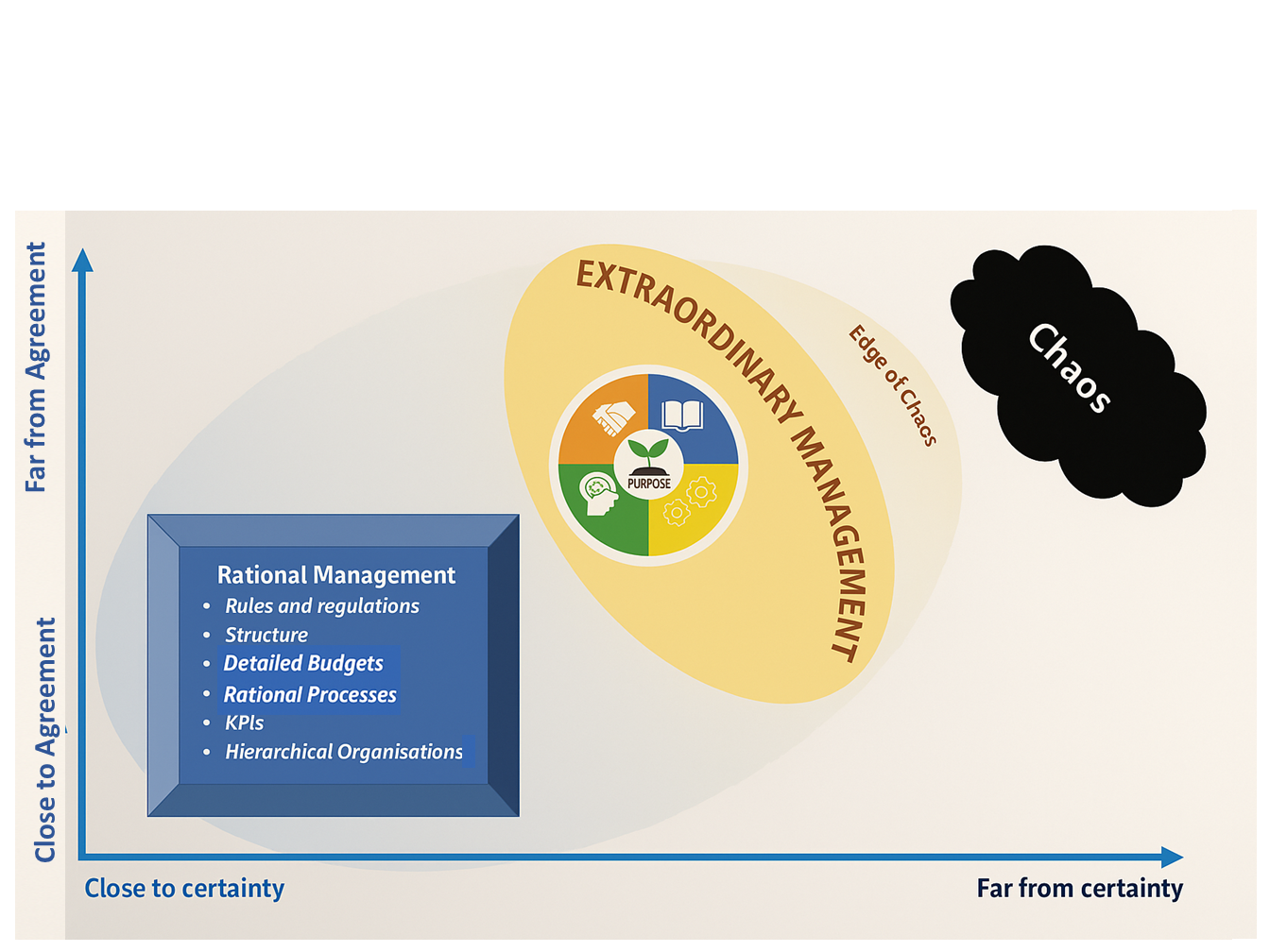
Figure 2: Agreement/ Certainty Matrix based on Stacey and Zimmerman
In complex conditions, organisations operate in environments as shown in Figure 2, where cause-and-effect relationships are not always clear, stable, or predictable. Stakeholders often interpret situations differently, competing priorities arise, and actions may lead to unintended outcomes that only become apparent later. Nonetheless, these conditions also create opportunities for innovation, adaptation, learning, and transformation.
This view closely aligns with Ralph D. Stacey’s work (R. Stacey, 1993; R. D. Stacey et al., 2000), which contends that organisations should not be seen solely as controllable systems, but as ongoing patterns of human interaction that develop amid uncertainty and interdependence. Similarly, Brenda Zimmerman highlighted that managing complex situations cannot rely solely on linear planning and control, as outcomes emerge dynamically through system interactions (Zimmerman, 2001).
Importantly, this area of complexity is also where meaningful organisational learning can happen. When conditions are stable, organisations tend to focus on efficiency, repetition, and standardisation. However, complexity fosters an environment where new relationships, perspectives, interpretations, and opportunities can develop. As a result, innovation, adaptation, and transformation become feasible because the environment becomes less predictable and controllable.
However, this environment is also deeply uncomfortable for many organisations and leaders because certainty begins to disappear. Ambiguity increases, disagreement becomes more visible, and established mental models no longer reliably explain what is happening. Under these conditions, organisations often experience strong pressure to prematurely simplify situations, accelerate decision-making, force alignment, standardise responses, and reassert control to reduce anxiety and restore the appearance of certainty.
Stacey cautioned that a craving for certainty can lead to issues when organisations try to enforce strict control over situations that inherently need participation, learning, experimentation, and adaptation. Likewise, Zimmerman suggested that dealing with complexity often calls for leaders to move away from issuing direct orders and control, instead fostering interaction, inquiry, feedback, participation, and collective learning.
From this perspective, managing complexity isn’t mainly about removing uncertainty. Instead, it focuses on building the organisation’s ability to learn, adapt, detect emerging changes, and respond coherently as circumstances shift. In complex situations, organisations cannot depend solely on linear planning, optimization, or control-based decisions. As conditions change, they must constantly re-sense, re-interpret, and adapt through ongoing cycles of learning, dialogue, reflection, and action.
This aligns closely with the recursive sensemaking and learning dynamics explored in the Source Note: Scharmer’s Theory U, Sensemaking and SECI.
Rather than viewing transformation as a staged process, the note reframes organisational adaptation as an ongoing relational learning cycle in which:
- sensing reshapes perception,
- perception reshapes dialogue,
- dialogue reshapes relationships,
- relationships reshape awareness,
- and awareness reshapes action.
See Figure 3: Theory U Sensemaking Cycle
The Collapse into False Certainty
In conditions of complexity, organisations operate in environments where relationships between cause and effect are no longer fully visible, stable, or predictable. Different stakeholders often interpret situations differently, competing priorities emerge, and actions can generate unintended consequences that only become visible over time. At the same time, these conditions also create the possibility for novelty, innovation, adaptation, learning, and transformation to emerge.
This perspective aligns strongly with the work of Ralph Stacey, who argued that organisations should not be understood purely as controllable systems, but as ongoing patterns of human interaction unfolding under conditions of uncertainty and interdependence. Similarly, Brenda Zimmerman emphasised that complex situations cannot be managed effectively through purely linear, control-oriented approaches, as outcomes emerge dynamically through interactions within the system itself.
Importantly, this zone of complexity also serves as the space where valuable organisational learning can happen. Usually, under stable conditions, organisations focus on efficiency, repetition, and standardisation. However, complexity fosters an environment where new connections, insights, interpretations, and opportunities can develop. As a result, innovation, adaptation, and transformation become achievable because the environment is no longer entirely predictable or manageable.
However, this environment can also be very uncomfortable for many organisations and leaders because it erodes certainty. Ambiguity grows, disagreements become more apparent, and existing mental models no longer accurately explain the situation. In such times, organisations often feel intense pressure to simplify these complexities too quickly, speed up decision-making, enforce alignment, standardize responses, and reestablish control to lessen anxiety and give a sense of certainty back.
Stacey warned that this desire for certainty can become problematic when organisations attempt to impose rigid control onto situations that fundamentally require participation, learning, experimentation, and adaptation. Zimmerman similarly argued that complexity often requires leaders to shift from directing and controlling toward enabling interaction, inquiry, feedback, participation, and collective learning.
From this perspective, managing complexity is not primarily about eliminating uncertainty. Rather, it involves developing the organisational capability to learn, adapt, sense emerging change, and respond coherently as conditions continue to evolve.
In complex environments, organisations tend to react to uncertainty not by engaging with it constructively but by trying to eliminate it psychologically. Instead of fostering learning, many instinctively aim to restore certainty, control, and cognitive ease rapidly. This response is natural because ambiguity often causes anxiety. Factors like unclear causality, conflicting interpretations, incomplete data, and emerging risks can produce significant emotional and organisational stress. pressure to “get clarity,” regain control, and demonstrate decisive action.
This often happens through premature classification, where situations are quickly labelled before enough investigation or understanding. Complex and changing conditions are simplified into basic categories to be managed with familiar procedures, structures, or governance methods. Ambiguity is seen as a problem to eliminate instead of a sign that further investigation might be needed.
Organisations might try to force alignment prematurely. Leaders often face pressure to quickly establish consensus, unified messaging, or strategic agreement before thoroughly exploring tensions, disagreements, uncertainties, and different interpretations. Although alignment has its benefits, doing so too early can hide weak signals, stifle dissent, decrease inquiry, and give a false impression of coherence without true shared understanding.
Similarly, organisations often rush into modelling, planning, and solution design. Early modelling can give a misleading sense of certainty by suggesting that the situation is well understood enough to support structured intervention. Excessive planning typically attempts to psychologically stabilise uncertainty with schedules, milestones, governance, and roadmaps, even when the actual conditions are still uncertain and evolving.
This dynamic is also visible in what might be described as dashboard obsession — the belief that increasing measurement, reporting, and visibility will necessarily reduce uncertainty. While metrics and data can be extremely valuable, organisations can become overly reliant on dashboards, KPIs, and reporting mechanisms that primarily capture what is already measurable, stable, and visible, while overlooking weak signals, relational dynamics, tacit knowledge, and emerging risks that remain difficult to quantify.
These patterns frequently lead to a “solution-first” mindset, where organisations rush to develop interventions without fully understanding the problem. Under pressure to act quickly, leaders may prioritize showing action over gaining a clear understanding. Solutions are chosen because they are familiar, politically feasible, easy to measure, or operationally convenient, rather than because they effectively address the complexity of the issue. This approach is often described as ‘jumping to solutions’ to quickly return to a sense of safety and avoid discomfort.
Writers such as Ralph Stacey and Brenda Zimmerman suggest that these tendencies arise because organizations tend to try enforcing control in environments that fundamentally need participation, experimentation, dialogue, reflection, and adaptive learning. In complex situations, the key challenge isn’t just about reducing uncertainty but about building the organizational ability to learn, sense, and adapt as uncertainty persists and changes.
👉This explains why many organisations become confidently wrong.
Leadership Changes in Complexity
Traditional leadership approaches often assume that the role of leadership is to diagnose problems, determine solutions, and direct implementation through planning, control, and execution. This perspective works reasonably well in stable environments where relationships between cause and effect are relatively visible, predictable, and repeatable.
However, complexity fundamentally changes the conditions under which leadership operates.
As we have discussed, thinkers such as Ralph Stacey, David Snowden, and complexity leadership researchers increasingly recognise that organisations operating under conditions of uncertainty cannot be understood as systems that leaders simply stand outside and control.
Outcomes arise from continuous interactions among individuals, relationships, interpretations, constraints, and environmental factors. As a result, actions cannot be entirely predetermined, and leaders cannot fully forecast how their interventions will evolve once they engage with the wider organisational and social system.
Under these conditions, leadership shifts from distant control to active participation and engagement within the system. The leadership role evolves from mainly holding answers to facilitating inquiry, reflection, dialogue, experimentation, and collective learning. As prediction becomes less dependable as a primary management tool, skills like adaptation, sensing, and sensemaking gain greater importance.
This also changes the practical conditions required for organisational effectiveness:
- Pacing becomes important because people require time to reflect, interpret, socialise knowledge, and adapt understanding as conditions evolve.
- Dialogue becomes essential because meaning, interpretation, and shared awareness emerge relationally through interaction rather than through simple information transfer.
- Trust and psychological safety grow even more essential because activities like uncertainty, experimentation, disagreement, and adaptive learning inherently involve vulnerability, ambiguity, and the risk of mistakes. People tend to hold back from sharing early warning signs, questioning assumptions, voicing concerns, admitting uncertainty, or proposing new ideas if they fear ridicule, punishment, political fallout, or damage to their reputation. Without strong psychological safety and stable relationships, organizations often react defensively, remain silent, jump to conclusions, and hinder learning.
- Ethical boundaries gain greater importance in complex situations because actions often lead to unpredictable consequences. Therefore, organisations need guiding principles, shared values, and a common purpose to responsibly navigate ambiguity and unforeseen outcomes when certainty is lacking.
Most importantly, learning itself becomes central to organisational survival. In complex conditions, organisations cannot rely solely on static plans, fixed assumptions, or historical success patterns. Their long-term viability increasingly depends on their ability to continuously sense change, learn collectively, adapt behaviour, and respond coherently as conditions evolve.
Complexity and Organisational Learning
This aligns strongly with the SECI model developed by Nonaka.
In complex environments:
- learning cannot simply be downloaded,
- knowledge cannot simply be transferred,
- and meaning cannot be imposed.
Shared understanding emerges socially through:
- interaction,
- reflection,
- experimentation,
- dialogue,
- challenge,
- and lived experience.

The relationship between complexity and learning becomes especially important:
- Simple environments favour standardisation.
- Complicated environments favour expertise and integration.
- Complex environments require socialisation, trust, and shared inquiry.
This is why:
👉 Adaptive Capacity depends as much on social capital as technical capability.
Ethics Inside Complexity
One of the greatest risks in complexity is the abstraction of responsibility.
Griffin strongly warned against treating “the system” as if it were an independent actor (Griffin, 2003).
When organisations say:
- “The system failed,”
- “The process broke.”
- or “culture caused the issue,”
Responsibility often disappears into abstraction. But ethics does not exist outside action.
👉 Ethics emerges in how people account to one another while acting.
This becomes especially important in complex environments under:
- urgency,
- pressure,
- uncertainty,
- and transformation.
Because these are precisely the conditions where:
- shortcuts appear attractive,
- false certainty emerges,
- and Fritz’s ‘Path of Least Resistance’ (Fritz, 1989) becomes psychologically seductive.
Presencing, Participation and Learning
Complexity cannot be managed purely through analysis, prediction, or control-oriented planning. Under stable conditions, analytical approaches are often highly effective because cause-and-effect relationships remain relatively visible and repeatable.
However, as uncertainty, interdependence, ambiguity, and rapid change increase, organisations increasingly encounter situations where outcomes emerge through ongoing interaction rather than linear execution.
Under these conditions, organisations must continually re-sense, re-interpret, and adapt as conditions evolve. Inquiry, listening, reflection, experimentation, and participation, therefore, become essential not because they are ideologically desirable, but because they improve the organisation’s ability to recognise emerging realities and respond coherently within changing environments.

Figure 3: Theory U Sensemaking Cycle
The recursive sensemaking cycle presented in Figure 3 illustrates how this adaptive learning process unfolds relationally over time. Sensing reshapes perception as individuals encounter new experiences, perspectives, and conditions that challenge existing assumptions. As perception changes, the quality of dialogue shifts. Conversations gradually move beyond downloading, positional defence, and debate toward inquiry, listening, and shared exploration.
Over time, dialogue itself begins reshaping relationships. Trust, mutual understanding, psychological safety, and shared context gradually influence how people interpret both the organisation and the environment around them. These evolving relationships subsequently reshape collective awareness, allowing groups to perceive patterns, tensions, risks, and opportunities that may previously have remained fragmented or invisible.
As awareness changes, action changes. Organisations begin experimenting, adapting, coordinating differently, and responding more coherently to emerging conditions. Importantly, these actions subsequently reshape the organisational and relational field itself. New experiences, practices, tensions, successes, and failures generate new learning conditions that, in turn, influence future sensing and interpretation.
From this perspective, managing complexity is not primarily about finding perfect plans or permanent solutions. It is about developing the organisational capability to learn, adapt, and re-orient as conditions evolve continuously. Complexity, therefore, requires recursive relational learning rather than purely linear control.
This interpretation aligns strongly with Scharmer’s Theory U framework, adaptive systems thinking, and Nonaka’s SECI model of organisational learning. Learning emerges not simply through information transfer, but through ongoing interaction between experience, dialogue, relationships, shared awareness, action, and reflection within a living social field.
👉In complexity learning must precede certainty.
Governing Insight
Managing complexity is not about eliminating uncertainty.
It is about:
- recognising the environment you are operating in,
- resisting premature certainty,
- creating conditions for learning and adaptation,
- enabling multiple perspectives to interact,
- and sustaining ethical participation under pressure.
The challenge is not finding the “right answer.”
👉 The challenge is to remain capable of learning while the situation unfolds.
🧭 In the Source Notes
Explore related perspectives:
- Systems Thinking
- The Great Inertia
- Do Not Force Certainty Too Early
- Systems Thinking as a Sensemaking Lens
- Dialogue vs Debate
- Shared Mental Models
- Hansei
- Mindsets for Adaptive Capacity
- Scenario Planning
- Source Note – Scharmer’s Theory U, Sensemaking and SECI
- Politics Replaces Sensemaking
- SECI as a learning system
Fritz, R. (1989). The path of least resistance: Learning to become the creative force in your own life: Ballantine Books.
Griffin, D. (2003). The emergence of leadership: Linking self-organization and ethics: Routledge.
Snowden, D. J., & Boone, M. E. (2007). A leader’s framework for decision making. Harvard business review, 85(11), 68.
Stacey, R. D., Griffin, D., & Shaw, P. (2000). Complexity and management: Fad or radical challenge to systems thinking? : Psychology Press.