✍️ Seeing the System (what kind of system are we in?)
Most organisations begin with an assumption:
👉 The world is understandable, predictable, and controllable.
That assumption is often wrong.
🧠 Start with the nature of the situation
From a systems perspective, the first question is not:
What should we do?
It is:
What kind of situation are we in?
As highlighted in the broader body of work on complexity:
- Not all problems are simple.
- Not all situations are analysable.
- Not all outcomes are predictable.
Dave Snowden’s work (Snowden & Boone, 2007) on decision contexts makes this explicit:
👉 Applying simple, linear approaches in complex environments leads to failure.
Even when a situation appears stable, it exists within a wider environment that is volatile, uncertain, complex and ambiguous. Ralph Stacey’s work (R. Stacey, 1993; R. D. Stacey, Griffin, & Shaw, 2000) on complexity and leadership reinforces this :
👉 Organisations operate through interaction in conditions that are inherently uncertain and evolving.
⚖️ Linear thinking vs systemic thinking
In linear thinking:
- Cause leads directly to effect.
- Problems can be isolated.
- Solutions can be designed and implemented.
This works in stable, repeatable contexts.
In systemic thinking:
- Cause and effect are separated in time and space.
- Actions interact with existing conditions.
- Outcomes emerge from multiple influences.
👉 What appears to be a simple problem often sits within a larger system of interactions.
🔁 Why quick fixes fail
🧭 In Adapt, Survive and Flourish (Old Paradigm Guideline):
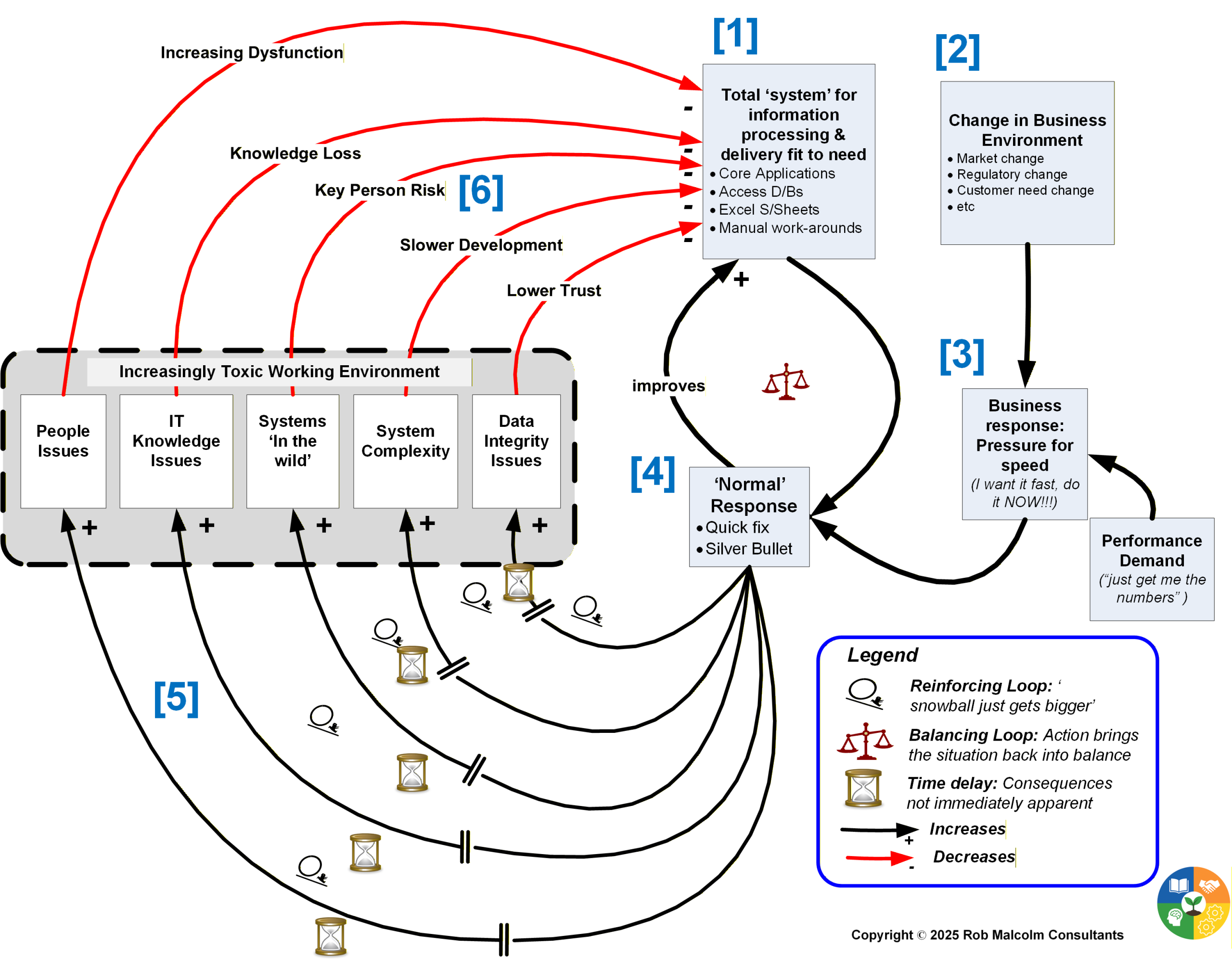
Figure 1: Quick Fixes that Fail and the ‘Normal’ Response
- interventions often target symptoms, not underlying dynamics.
- short-term improvements create longer-term problems.
- repeated fixes reinforce the very issues they aim to solve.
👉 Organisations default to what feels like the “normal response,”
even when it is ineffective
🧱 Systems push back
A defining characteristic of systems is this:
They resist being changed in simple, direct ways.
Peter Senge (Senge, 1994, 1997) captured this succinctly:
👉 “The harder you push against the system, the harder it pushes back.”
This is not a metaphor—it is observable in practice:
- Repeated interventions produce the same outcomes.
- Increasing effort does not improve results.
- frustration builds without progress.
💬 Practitioner reflection
I spent years trying to stop database hacks introduced to “get things done fast.” It rarely worked. Delivery pressure overrode good practice—every time.
Eventually, it became clear: the system was driving the behaviour.
👉 If you keep applying the same response, the system will keep responding the same way.
⏳ Cause and effect over time.
One of the most challenging aspects of systems thinking is delay. Have a look at the reinforcing loops in the Paradigm chapters of Adapt, Survive and Flourish, they all have time delays.
👉 The effects of actions are often not immediate.
- Decisions made today may show consequences later.
- Feedback arrives after conditions have changed.
- Cause and effect are no longer visibly linked.
💬 Practitioner insight
The cleanup is often left to someone who wasn’t part of the original decision.
By then, the consequences are real, the context has shifted, and accountability is unclear.
This creates a critical trap:
- Outcomes are attributed to the wrong causes.
- Ineffective actions are repeated.
- The system is never fully understood.
- Scapegoats are found and blamed for the failure!
🎯 Practical shift
Seeing the system requires a change in posture:
- from reacting to events → observing patterns
- from isolated problems → understanding interconnections
- from immediate results → recognising consequences over time
👉 Systems thinking is not about solving problems faster.
👉 It is about understanding why the same problems keep returning.
🔁 How systems behave
System behaviour is not random.
It is driven by a small number of recurring patterns that operate over time.
These patterns are visible in the causal loops described in Adapt, Survive and Flourish.
Reinforcing loops — problems compound
Reinforcing loops amplify behaviour over time.
- pressure increases → quick fixes are applied.
- quick fixes create hidden issues.
- hidden issues increase pressure.
👉 The cycle repeats and intensifies.
In the ASF “Old Paradigm”:
- pressure for speed leads to short-term solutions
- these increase complexity, reduce trust, and degrade data integrity.
- the system becomes harder to manage.
- pressure increases further.
👉 The system is not stabilising — it is accelerating.
⚖️ Balancing loops — stability under strain
Balancing loops attempt to stabilise the system.
- Action is taken to restore control.
- Short-term performance improves.
- The system appears to be “working” again.
👉 But this stability is often temporary.
In ASF:
- the “normal response” (quick fix / silver bullet),
- acts as a balancing loop,
- it relieves immediate pressure.
👉 But it does not address the underlying dynamics.
⏳ Delays — the system hides its own behaviour.
One of the most dangerous characteristics of systems is delay.
👉 Consequences are not immediately visible.
- Short-term fixes appear successful.
- Underlying problems accumulate silently.
- By the time effects emerge, the cause is no longer obvious.
- The causes are often hidden when decisions are made. Under sustained pressure, organisations can slip into wilful blindness—where short-term targets dominate, and longer-term consequences are knowingly set aside.
In the ASF loops:
- Problems such as data integrity issues emerge long after the original shortcut.
- Knowledge loss becomes visible only when key people leave.
- Trust declines gradually, not instantly.
👉 The system masks cause and effect.
🔀 Non-linearity — small actions, large consequences
Systems do not respond proportionally.
- Small decisions can trigger large downstream effects.
- Major interventions can produce minimal impact.
In ASF:
- A single workaround can introduce long-term data fragmentation.
- Repeated “small” compromises accumulate into systemic dysfunction.
👉 Impact is shaped by the system, not the size of the action.
How We Misread Systems (failure)
👉 Why people get it wrong
- Forcing linear cause–effect.
- Short-term fixes.
- Ignoring delays.
- Fragmented perspectives.
Links to:
- One-page trap.
- Analysis paralysis.
- Performative consensus.
👉 What to do differently
- Step back before acting.
- Look for patterns, not events.
- Engage multiple perspectives.
- Test in reality (Gemba).
Working With the System – DSRP
Derek Cabrera’s DSRP framework (Cabrera & Cabrera, 2022), which has four universal patterns of human sensemaking.
While systems thinking helps us see patterns, DSRP provides a practical way to structure how we think about them:
- D: Distinction: Making a distinction to determine what something is or what it is not. This provides a boundary for discussions.
- S: System: How is the system ecosystem organised? What are the parts? What higher system is ours a part of? See the whole by understanding its parts and how they connect. Consider what larger system this part belongs to and where it fits in the bigger picture. Think about what this system contains.
- R: Relationships: Identify how elements influence and connect with one another. How do the elements collaborate with each other?
- P: Perspectives: Understand viewpoints, roles, interests, and information needs. Who are the other stakeholders involved, and what are their interests?
DSRP and SECI work together.
SECI shows us how knowledge moves — tacit → explicit → shared → internalised. But DSRP sits one level above that. It is not just about sharing knowledge; it is about teaching people how to think, how to structure their sensemaking, and how to build models that reflect reality rather than reinforcing old mental cages.
This capability complements sensemaking by unlocking organisational improvising — the holy grail of resilience.
- If SECI builds shared knowledge, DSRP builds shared thinking.
- If BCM/CDM build the stable foundations of organisational knowledge,
DSRP builds the cognitive mechanisms that keep them alive.
This is what allows an organisation to be both coherent and adaptive — stable where it must be, fluid where it needs to be.
And when people develop these thinking skills, the whole organisation gains the ability to improvise in the face of uncertainty. That is the ultimate test of resilience, and arguably the defining requirement for survival in complex environments.
Systems Thinking in The Framework
- DSRP → structures thinking.
- Sensemaking → interprets the system.
- Enterprise Architecture (BCM/CDM) → structures shared understanding
- KOS → stabilises knowledge.
- Organisational Ecology → reveals behaviour over time.
Cabrera, D., & Cabrera, L. (2022). DSRP theory: A primer. Systems, 10(2), 26.
Senge, P. M. (1994). The fifth discipline fieldbook: Strategies and tools for building a learning organization: Crown Currency.
Senge, P. M. (1997). The fifth discipline. Measuring business excellence, 1(3), 46–51.
Snowden, D. J., & Boone, M. E. (2007). A leader’s framework for decision making. Harvard business review, 85(11), 68.
Stacey, R. (1993). Strategy as order emerging from chaos. Long range planning, 26(1), 10–17.
Stacey, R. D., Griffin, D., & Shaw, P. (2000). Complexity and management: Fad or radical challenge to systems thinking? : Psychology Press.